Electric vehicles (EVs) are becoming more common on roads worldwide. In 2022, EV sales exceeded 10 million, according to the International Energy Agency. But for many people, charging remains a mystery. How does plugging into a wall or a public station actually refill the battery? This article breaks down the process in plain terms.
The Basics: AC vs DC Power
Electricity comes in two forms: alternating current (AC) and direct current (DC). The grid delivers AC power to your home and most public charging stations. But batteries store and release DC power. So, to charge an EV, you need to convert AC to DC. That conversion happens either onboard the car or inside a fast charger.
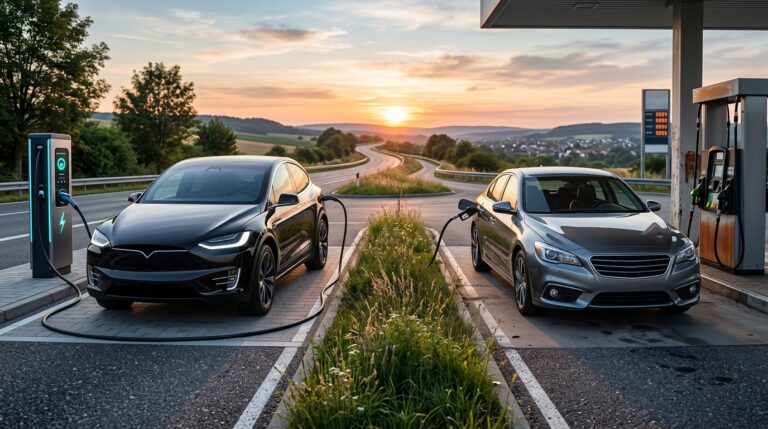
Level 1 and Level 2 charging use the car’s built-in charger to convert AC to DC. DC fast charging bypasses that onboard charger and delivers DC power directly to the battery. This is why DC fast charging is much quicker. For example, a 50 kW DC fast charger can add about 150 miles of range in 30 minutes, while a 7 kW Level 2 charger adds roughly 25 miles per hour.
Level 1 Charging: The Slowest but Simplest
Level 1 charging uses a standard 120-volt household outlet. You plug the included cord into any regular outlet, and the car charges at about 1.4 kW. That adds roughly 4 to 5 miles of range per hour. It’s fine for plug-in hybrids with small batteries or for drivers who cover very few miles daily. But for a full EV with a 300-mile range, Level 1 can take days to fully charge.
Most EV owners use Level 1 only as a backup or when visiting friends. It’s not practical for regular use unless you drive less than 40 miles a day.
Level 2 Charging: The Home and Public Workhorse
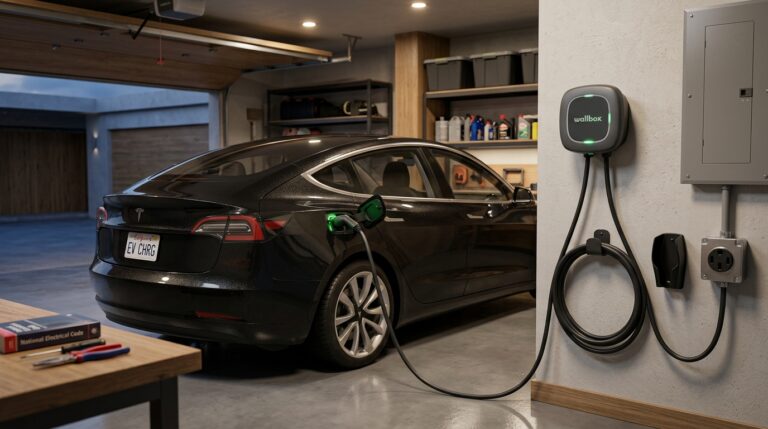
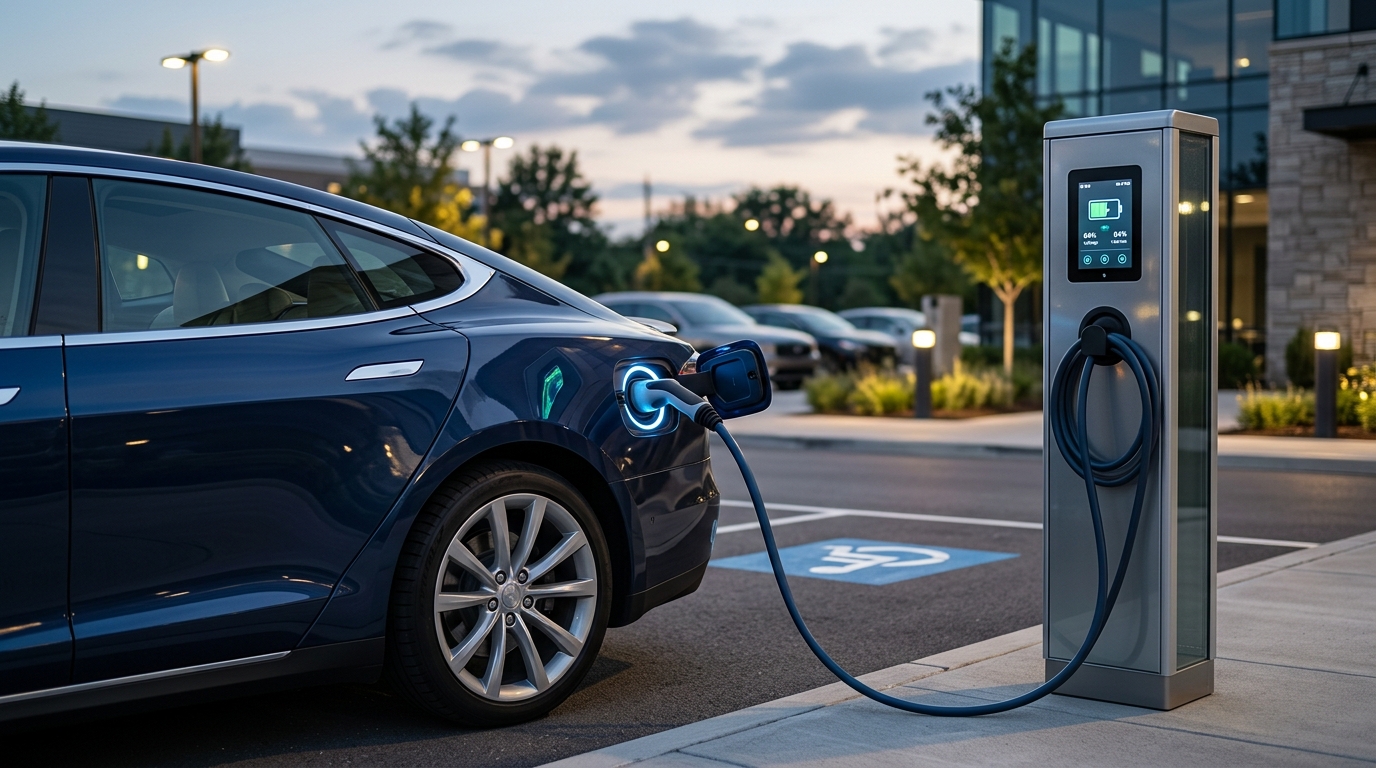
Level 2 charging uses a 240-volt circuit, like what an electric oven or dryer uses. You can install a Level 2 charger at home for $500 to $2,000, including installation. It delivers 3.3 kW to 19.2 kW, adding 10 to 60 miles of range per hour. Most public charging stations at workplaces, shopping centers, and hotels are Level 2.
For daily driving, Level 2 is the sweet spot. Charge overnight and wake up to a full battery. A 40-amp Level 2 charger adds about 30 miles of range per hour. So, a typical 8-hour overnight session can replenish 240 miles, enough for most people’s weekly driving.
DC Fast Charging: For Road Trips and Quick Top-Ups
DC fast charging (DCFC) stations deliver 50 kW to 350 kW. They can charge a battery to 80% in 20 to 40 minutes, depending on the car and charger. Tesla’s Supercharger network, for instance, can add up to 200 miles in 15 minutes at a 250 kW station. But not all EVs can accept high power. A car with a 50 kW max will charge slower even at a 350 kW station.
DC fast charging is ideal for long trips. However, frequent fast charging can degrade battery health over time. Most manufacturers recommend using it sparingly for daily needs.
How the Charging Process Works Step by Step
When you plug in, a conversation happens between the car and the charger. This is called the handshake. The charger checks the car’s battery state, temperature, and maximum charge rate. Then it sends power at the appropriate level. Here’s what happens:
- Plug in: The connector locks into the car’s charge port.
- Handshake: The charger and car communicate via a pilot signal to agree on power level.
- Charging begins: Power flows to the battery, managed by the battery management system (BMS).
- Monitoring: The BMS watches cell voltage and temperature, adjusting current to prevent damage.
- Charging ends: When the battery reaches the set limit (often 80% or 100%), the charger stops.
The BMS is the brain behind safe charging. It ensures cells stay within safe temperature and voltage ranges. In cold weather, it may warm the battery first. In hot weather, it may cool it. This is why charging can be slower in extreme temperatures.
Charging Speeds and What Affects Them
Many factors affect how fast your EV charges. The charger’s power output is one. The car’s onboard charger limits AC charging speed. For DC fast charging, the car’s battery architecture and state of charge matter. A battery at 20% will accept more power than one at 80%. That’s why the last 20% takes much longer.
Battery temperature is another factor. Lithium-ion batteries charge best between 50°F and 110°F (10°C to 43°C). Below freezing, charging can be half as fast. Above 110°F, the car may limit power to avoid damage. Some EVs have preconditioning that warms or cools the battery before you arrive at a fast charger.
Your charging cable also matters. A Level 2 charger with a 40-amp capacity needs a 50-amp circuit. If you use a smaller circuit, the charger will reduce power. Always check the car’s maximum AC acceptance rate. For example, a car with a 7.2 kW onboard charger won’t benefit from a 19.2 kW station.
Battery Management and Longevity
Your EV’s battery is expensive, often $10,000 or more to replace. Protecting it is key. Most manufacturers recommend keeping the state of charge between 20% and 80% for daily driving. Charging to 100% is fine before a long trip, but don’t leave it there for days. High states of charge stress the battery.
Similarly, letting the battery sit at very low charge (below 10%) for long periods can cause damage. If you’re parking for weeks, leave it at around 50%. Tesla, for instance, suggests plugging in daily and setting the charge limit to 80% or 90% for regular use.
Fast charging also affects longevity. A 2019 study by the Idaho National Laboratory found that frequent DC fast charging can reduce battery capacity faster than AC charging. But occasional fast charging on road trips is fine. The battery management system protects against most harm.
Public Charging Networks and Payment
Public charging is growing fast. In the U.S., there are over 140,000 public charging ports as of 2023, according to the Department of Energy. Networks like ChargePoint, Electrify America, and EVgo operate many of them. Tesla’s Supercharger network is the largest, with over 45,000 stalls globally.
Payment methods vary. Some stations accept credit cards, others require an app or RFID card. Many networks offer roaming agreements, so you can use one account across multiple networks. Apps like PlugShare help you find stations and check if they’re working.
Charging costs vary widely. Home charging costs about $0.15 per kWh on average in the U.S., so a full charge for a 300-mile battery (100 kWh) costs around $15. Public DC fast charging can cost $0.30 to $0.60 per kWh, or sometimes a flat fee. Some stations charge by the minute instead.
Common Myths and Misconceptions
One myth is that you can’t charge an EV in the rain. You can. Charging equipment is designed to be weatherproof. Another myth is that charging always takes hours. DC fast charging can add 100 miles in 15 minutes. Also, charging doesn’t wear out the battery as fast as some claim, thanks to modern BMS.
Some people think you need a special outlet. For Level 1, a standard outlet works. For Level 2, you need a 240-volt circuit, but many homes already have one for a dryer. Installation is straightforward for an electrician.
Finally, not all EVs charge at the same speed. Always check the car’s peak charging rate. A Chevy Bolt, for example, maxes out at 55 kW DC fast charging, while a Hyundai Ioniq 5 can hit 350 kW. That’s a big difference on a road trip.
Conclusion
EV charging isn’t magic. It’s a managed flow of electricity from the grid to your battery, with safety checks along the way. Understanding the levels, speeds, and best practices helps you get the most out of your electric car. Whether you charge at home overnight or stop at a fast charger on a trip, the process is straightforward once you know the basics.
Q: How long does it take to charge an electric car?
It depends on the charger and battery size. A Level 1 household outlet adds about 4-5 miles per hour. A Level 2 charger adds 10-60 miles per hour. DC fast charging can add 100-200 miles in 20-40 minutes. For a full charge from empty, Level 2 might take 8-12 hours, while DC fast charging can reach 80% in 30 minutes.
Q: Can I charge my EV at any public station?
Most public stations are compatible with all EVs, but connectors vary by region. In the U.S., Tesla uses a proprietary connector, though adapters are available. Many networks use the J1772 or CCS plug. Always check the station’s connector type and your car’s inlet. Apps like PlugShare list compatibility.
Q: Does fast charging damage the battery?
Occasional fast charging is fine, but frequent use can accelerate battery degradation. A 2019 study by Idaho National Laboratory found that DC fast charging can reduce capacity faster than AC charging. However, modern battery management systems mitigate most risks. For daily driving, use Level 2 charging when possible.
Q: What is the difference between AC and DC charging?
AC charging uses the car’s onboard charger to convert alternating current from the grid to DC for the battery. DC fast charging bypasses the onboard charger and supplies DC power directly, allowing much higher speeds. AC charging is slower and used for home and destination charging, while DC is for rapid top-ups on the road.
Q: How much does it cost to charge an EV?
Home charging costs about $0.15 per kWh on average in the U.S., so a full charge for a 100 kWh battery costs around $15. Public DC fast charging ranges from $0.30 to $0.60 per kWh, or sometimes a flat fee per session. Some networks charge by the minute. Costs vary by location and time of day.
Article Was Generated By AI.