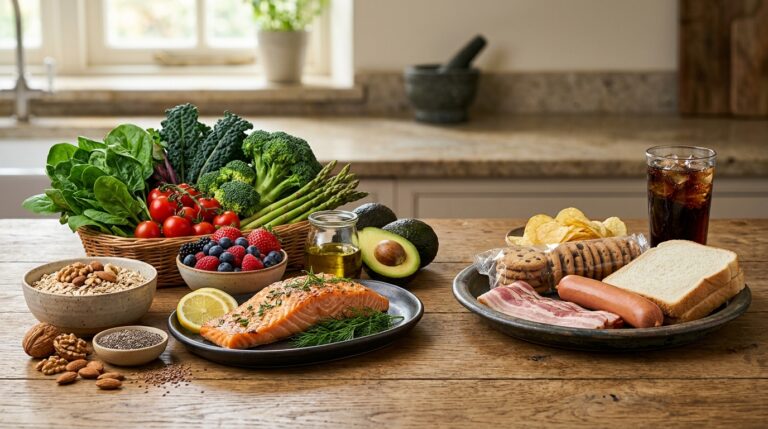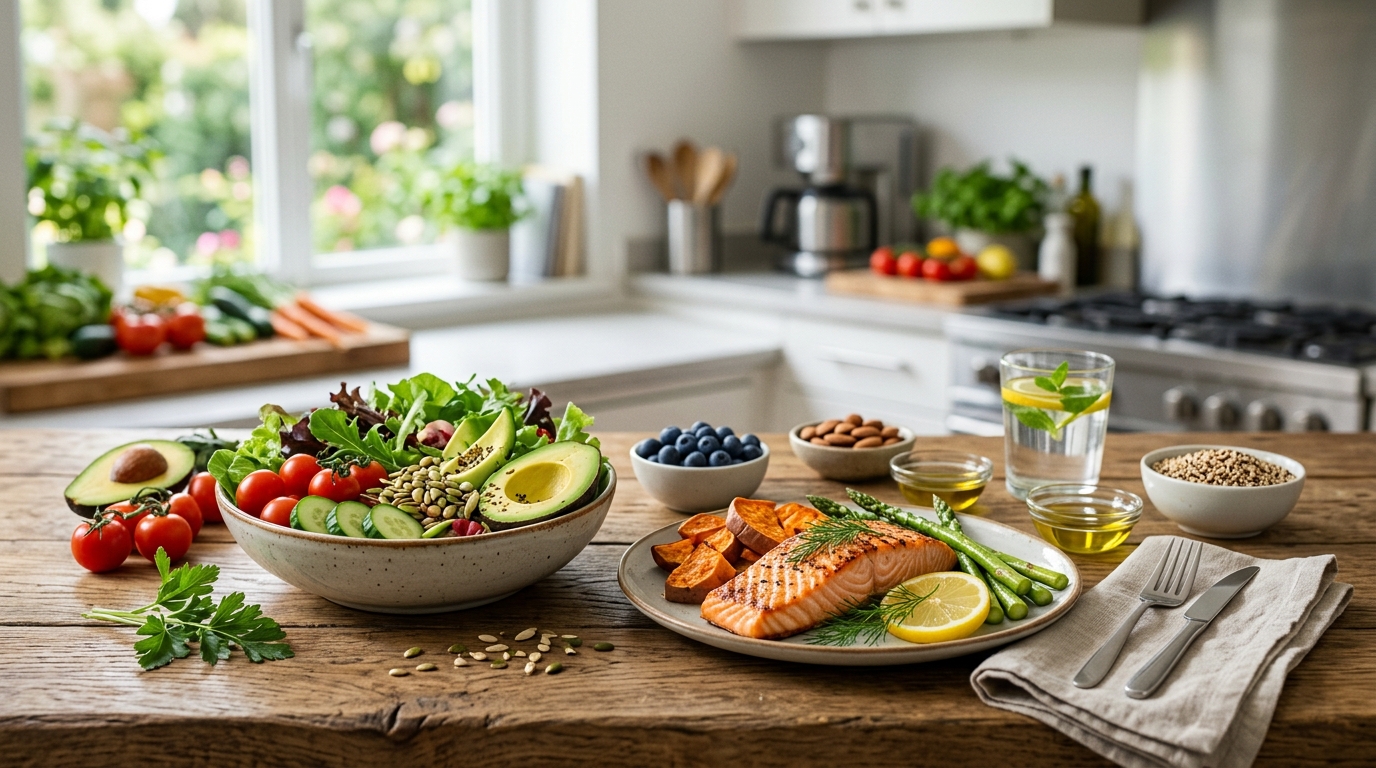
Losing weight and keeping it off takes more than cutting calories. A balanced diet gives your body the nutrients it needs while keeping hunger in check. That combination makes long-term weight loss possible. In fact, a 2020 study in The BMJ found that people who followed a balanced diet with adequate protein and fiber lost more weight and kept it off better than those on low-calorie plans alone.
Why Calories Alone Don’t Work
Calories matter, but they’re not the whole story. When you slash calories without considering nutrient balance, your body fights back. Ghrelin, your hunger hormone, rises. Leptin, which signals fullness, drops. You feel tired, cranky, and ravenous.
That’s why crash diets fail 80 to 95 percent of the time, according to research from UCLA. A balanced diet prevents these hormonal swings by giving you steady energy and lasting satiety.
The Three Pillars of a Balanced Diet for Weight Loss
You don’t need a complicated macro calculator. Focus on three key areas: protein, fiber, and healthy fats. Each one plays a specific role in helping you lose weight and keep it off.
Protein: The Satiety Champion
Protein keeps you full longer than carbs or fat. It also helps preserve muscle mass while you lose fat. That matters because muscle burns more calories at rest.
Aim for 0.7 to 1 gram of protein per pound of body weight daily. For a 150-pound person, that’s 105 to 150 grams. Good sources include chicken, fish, eggs, Greek yogurt, lentils, and tofu.
In practice, I’ve seen clients transform their results simply by adding a palm-sized portion of protein to every meal. It’s a small change with a big payoff.
Fiber: Your Secret Weapon
Fiber slows digestion, stabilizes blood sugar, and keeps you full. Most adults get only 15 grams a day, far short of the recommended 25 to 30 grams.
Fill half your plate with non-starchy vegetables. Add a serving of fruit, like a medium apple (4 grams of fiber) or a cup of raspberries (8 grams). Choose whole grains over refined ones.
A 2019 study in The Lancet found that people who ate the most fiber were 15 to 30 percent less likely to die from any cause compared to those who ate the least. Fiber is a cornerstone of long-term health and weight management.
Healthy Fats: Don’t Fear Them
Fat doesn’t make you fat. Excess calories do. Healthy fats from olive oil, avocados, nuts, and fatty fish help you absorb vitamins and feel satisfied.
They also make food taste better, which matters when you’re eating more vegetables. Just watch portions. A tablespoon of olive oil has 120 calories. A small handful of almonds has about 160.
Include a thumb-sized portion of fat at each meal. It’s enough to get the benefits without overdoing calories.
How to Build a Balanced Plate
You don’t need to count every gram. Use the plate method as a simple guide.
- Fill half your plate with non-starchy vegetables: leafy greens, broccoli, peppers, zucchini.
- Fill a quarter with lean protein: chicken, fish, beans, tofu.
- Fill the remaining quarter with complex carbs: quinoa, brown rice, sweet potato.
- Add a thumb-sized portion of healthy fat: olive oil, avocado, nuts.
This visual approach works because it naturally balances your macronutrients and fiber without any math.
Balanced Diet vs. Fad Diets: What the Science Says
Fad diets often eliminate entire food groups. Keto cuts carbs. Paleo eliminates grains and dairy. While these plans can produce short-term weight loss, they’re hard to sustain.
A 2021 review in the Journal of the American Dietetic Association compared popular diets and found that adherence was the strongest predictor of long-term success. People who could stick with a plan lost the most weight.
A balanced diet wins because it’s flexible. You can eat out, travel, and enjoy treats without derailing your progress. That flexibility is what makes it last.
Common Mistakes to Avoid
Even with good intentions, it’s easy to slip up. Here are three pitfalls to watch for.
- Drinking your calories. Sodas, juices, and fancy coffee drinks can add 300 to 500 calories a day. Swap them for water, sparkling water, or unsweetened tea.
- Skipping meals. This leads to overeating later. Aim for three balanced meals and one or two snacks if you’re hungry.
- Not planning ahead. When you’re hungry and unprepared, you’ll grab whatever’s convenient. Spend 10 minutes each week planning your meals.
Making It Stick: Habits for the Long Haul
Long-term weight loss isn’t about willpower. It’s about building habits that become automatic.
Start with one small change. Maybe it’s adding a vegetable to lunch. Once that feels normal, add another. Research from University College London shows it takes about 66 days for a new habit to become automatic.
Track your progress in a way that works for you. Some people love apps. Others prefer a simple notebook. The key is awareness, not perfection.
And don’t forget sleep and stress. A 2019 study in the American Journal of Clinical Nutrition found that sleep-deprived people ate an extra 385 calories per day. Stress can spike cortisol, which increases belly fat. Prioritize both.
Conclusion
A balanced diet supports long-term weight loss by keeping you full, energized, and satisfied. Focus on protein, fiber, and healthy fats. Build your plate with vegetables, lean protein, complex carbs, and a little fat. Avoid fad diets and build sustainable habits instead.
You don’t need to be perfect. You just need to be consistent. Start with one balanced meal today, and build from there.
Q: How does a balanced diet help with weight loss?
A balanced diet provides the right mix of protein, fiber, and healthy fats to keep you full and satisfied while ensuring you get essential nutrients. This prevents overeating and muscle loss, making it easier to maintain a calorie deficit long-term. Studies show people who eat balanced meals lose more weight and keep it off better than those on restrictive diets.
Q: What should I eat for long-term weight loss?
Focus on whole foods: lean proteins (chicken, fish, beans), plenty of vegetables, fruits, whole grains, and healthy fats (olive oil, nuts, avocado). Aim for 25-30 grams of fiber and 0.7-1 gram of protein per pound of body weight daily. This combination keeps you full and supports muscle mass, which helps you burn more calories at rest.
Q: Can I lose weight without counting calories?
Yes, you can lose weight without strict calorie counting by using the plate method: half vegetables, a quarter lean protein, a quarter complex carbs, plus a thumb of healthy fat. This naturally controls portions and balances nutrients. However, some people find tracking helpful initially to understand portion sizes. The key is consistency, not perfection.
Q: How long does it take to see results from a balanced diet?
Most people notice changes in energy and digestion within 1-2 weeks. Visible weight loss typically starts after 3-4 weeks, with a safe rate of 1-2 pounds per week. Long-term success depends on adherence. Research shows it takes about 66 days for new eating habits to become automatic, so be patient and consistent.
Q: What’s the biggest mistake people make when trying to lose weight?
The biggest mistake is following overly restrictive diets that eliminate entire food groups. These plans are hard to sustain and often lead to binge eating. Instead, focus on adding nutrient-dense foods like vegetables, lean protein, and fiber. This approach is flexible, satisfying, and easier to maintain for life.
Article Was Generated By AI.