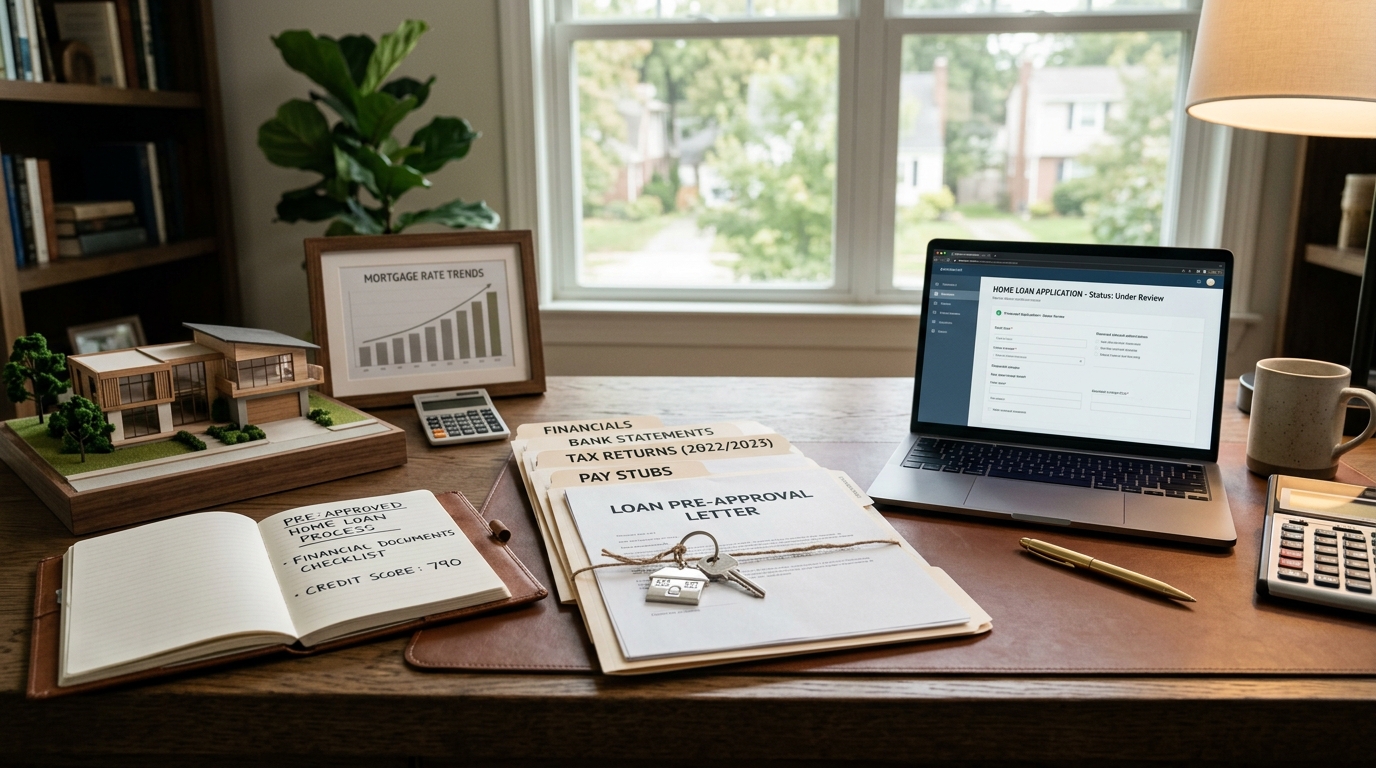
Getting pre-approved for a home loan is a crucial step in the homebuying process. It tells sellers you’re a serious buyer and helps you understand how much you can afford. In this guide, you’ll learn exactly how to get pre-approved, what lenders look for, and how to strengthen your application.
What Is Mortgage Pre-Approval?
Pre-approval is a lender’s conditional commitment to lend you a specific amount, based on a review of your finances. It’s more thorough than pre-qualification, which is just an estimate. Pre-approval involves verifying your income, assets, and credit.
According to a 2023 survey by the National Association of Realtors, 87% of buyers financed their home purchase. Pre-approval gives you a competitive edge in hot markets. Sellers often prefer offers with pre-approval letters because it reduces the risk of financing falling through.
Step 1: Check Your Credit Score
Your credit score is a key factor in pre-approval. Most lenders require a minimum score of 620 for conventional loans, but some government-backed loans like FHA allow scores as low as 580. Check your score for free from annualcreditreport.com or your bank.
If your score is below 620, take time to improve it. Pay down credit card balances, avoid opening new accounts, and dispute any errors. Even a 20-point increase can lead to a lower interest rate. For example, a 740 score might get a 6.5% rate, while a 620 score could get 7.5%, costing you thousands more over 30 years.
Step 2: Gather Your Financial Documents
Lenders need proof of income, assets, and debts. Having these ready speeds up the process. Here’s a checklist of what you’ll typically need:
- Recent pay stubs (last 30 days)
- W-2s or tax returns (last 2 years)
- Bank statements (last 2-3 months)
- Proof of other income (bonuses, alimony, rental income)
- List of debts (credit cards, student loans, car payments)
- Identification (driver’s license, Social Security number)
If you’re self-employed, you’ll need profit-and-loss statements and business tax returns. Having these documents organized can cut days off the pre-approval timeline.
Step 3: Choose the Right Lender
Not all lenders are equal. Banks, credit unions, and online lenders have different rates and fees. It’s smart to get quotes from at least three lenders. A 2023 study by Freddie Mac found that borrowers who got one extra quote saved an average of $1,500 over the life of the loan.
Ask about pre-approval timelines and costs. Some lenders offer a free pre-approval, while others charge a fee. Also, consider working with a mortgage broker who can shop multiple lenders for you. In practice, brokers often have access to wholesale rates that aren’t public.
Step 4: Submit Your Application
You can apply online, over the phone, or in person. You’ll fill out a standard mortgage application (Form 1003) and provide your documents. The lender will then pull your credit and verify your information.
Expect a hard credit inquiry, which may temporarily lower your score by a few points. However, if you apply with multiple lenders within a 45-day window, it counts as one inquiry for scoring purposes. That’s a tip from FICO.
Step 5: Receive Your Pre-Approval Letter
After underwriting, you’ll get a pre-approval letter stating how much you can borrow. This letter typically lasts 60 to 90 days. It’s not a final loan approval, but it carries weight with sellers.
Keep your finances stable during this period. Don’t change jobs, make large purchases, or close credit accounts. Lenders may re-check your credit before closing. A sudden change could jeopardize your approval.
How to Strengthen Your Pre-Approval Chances
Even if you meet the basics, you can improve your odds. Here are a few strategies:
- Lower your debt-to-income ratio (DTI). Most lenders prefer a DTI below 43%. Paying off a small credit card can make a big difference.
- Save for a larger down payment. A 20% down payment avoids private mortgage insurance (PMI) and shows lenders you’re low-risk.
- Get a co-signer. If your credit or income is weak, a co-signer with strong finances can help you qualify.
- Document alternative income. If you have freelance or investment income, provide thorough records.
In practice, lenders also look at your employment history. Two years at the same job is ideal, but steady income in the same field also works.
Common Mistakes to Avoid
Many buyers stumble by making these errors:
- Applying for new credit cards before closing.
- Changing jobs without informing the lender.
- Making large, unexplained cash deposits.
- Assuming pre-approval guarantees a loan.
Remember, pre-approval is based on your current financial snapshot. Any major change can alter the lender’s decision.
Conclusion
Getting pre-approved for a home loan involves checking your credit, gathering documents, and choosing a lender. It’s a straightforward process that can take as little as a few days. With a pre-approval letter in hand, you’ll shop with confidence and negotiate from a position of strength. Start today by pulling your credit report and talking to a lender.
Q: How long does pre-approval take?
Pre-approval can take anywhere from a few hours to a week, depending on the lender and how quickly you provide documents. Online lenders often give same-day decisions, while banks may take longer. Having your paperwork ready can speed things up significantly.
Q: Does pre-approval hurt my credit score?
A pre-approval involves a hard credit inquiry, which may lower your score by a few points. However, if you apply with multiple lenders within a 45-day window, FICO counts it as one inquiry. So it’s smart to shop around without worrying too much about damage.
Q: Can I get pre-approved with bad credit?
It’s possible, but you’ll likely need a score of at least 580 for FHA loans or 620 for conventional loans. Some lenders offer pre-approval with lower scores if you have compensating factors like a large down payment or co-signer. Improving your credit first can get you better terms.
Q: What’s the difference between pre-qualification and pre-approval?
Pre-qualification is a quick estimate based on self-reported information, while pre-approval involves verifying your income, assets, and credit. Pre-approval is stronger and more respected by sellers. It requires more documentation but gives you a competitive edge.
Q: How long is a pre-approval letter valid?
Most pre-approval letters last 60 to 90 days. If your home search takes longer, you can ask your lender to renew it. They may need to re-check your credit and finances. Keep your situation stable to avoid issues.
Article Was Generated By AI.