Type 2 diabetes develops slowly. About 1 in 3 adults in the U.S. has prediabetes, and more than 8 in 10 of them don’t know it, according to the CDC. The symptoms can be easy to dismiss as stress, aging, or a busy week. But catching the signs early gives you more options for managing blood sugar and avoiding complications.
Here are the symptoms worth paying attention to, plus why they happen and when it’s time to call your doctor.
Why Symptoms Sneak Up on You
With type 2 diabetes, your body stops using insulin efficiently. That’s called insulin resistance. At first, your pancreas works harder to compensate. Blood sugar stays normal-ish, and you feel fine. Over years, that compensation fails. Glucose builds up in your blood, and symptoms start to show.
That slow ramp is why the CDC estimates 8.5 million Americans have diabetes but haven’t been diagnosed. There’s no dramatic moment. Just a gradual shift.
In practice, many people find out through a routine blood test, not because they felt sick. That’s why knowing the signs matters. You might notice something subtle and bring it up before things get worse.
The Classic Warning Signs
1. Peeing More Often, Especially at Night
When blood sugar is high, your kidneys work to flush out the extra glucose. That pulls water with it, so you urinate more. Waking up two or three times a night to pee, when you used to sleep through, is a common early clue.
2. Constant Thirst
All that peeing leaves you dehydrated. You drink more, but it doesn’t seem to help. If you’re draining a water bottle every hour and still feel dry, that’s worth mentioning to a doctor.
Thirst and frequent urination often show up together. They’re two of the most reliable early symptoms.
3. Blurry Vision
High glucose changes the shape of your eye’s lens. It swells slightly, which makes your vision blurry. This can come and go as your blood sugar fluctuates.
Some people mistake it for needing new glasses. If your vision changes suddenly, get your blood sugar checked before you buy new lenses.
4. Unexplained Fatigue
Your cells can’t pull in glucose for energy when insulin isn’t working right. So you feel tired, even after a full night’s sleep. It’s not the kind of tired that a nap fixes.
One study in Diabetes Care found that fatigue is one of the most common symptoms reported before diagnosis. It’s also one of the easiest to blame on work or age.
Signs You Might Not Expect
5. Slow-Healing Cuts and Bruises
High blood sugar impairs circulation and the function of immune cells. A small cut that used to heal in a few days might linger for weeks. Bruises stick around longer too.
If you notice a scrape on your shin that’s been there for two weeks, don’t ignore it.
6. Frequent Infections
Yeast infections, urinary tract infections, and skin infections all become more common when blood sugar is high. Yeast thrives on sugar. Women may notice more vaginal yeast infections; men can get jock itch or balanitis.
Recurring infections are a reason to ask for an A1C test, even if you feel otherwise okay.
7. Tingling or Numbness in Hands and Feet
This is peripheral neuropathy. High glucose damages small nerves, usually starting in the feet. You might feel pins and needles, burning, or a loss of sensation.
About half of people with diabetes develop some form of neuropathy, per the National Institute of Diabetes and Digestive and Kidney Diseases. It’s often reversible if caught early, which is another reason not to wait.
8. Dark Velvety Patches on Skin
Called acanthosis nigricans, these patches show up in skin folds: neck, armpits, groin. They’re a sign of insulin resistance and often appear years before diabetes.
If you see them, it’s a strong signal to get your blood sugar checked.
9. Unexplained Weight Loss
When your cells can’t use glucose, your body burns fat and muscle for fuel. You might lose weight without trying, even though you’re eating normally or more.
This is more common in type 1 diabetes, but it can happen in type 2 as well, especially if blood sugar is very high.
10. Increased Hunger
Even after a meal, your cells are starving for energy. That can trigger intense hunger, even if you just ate. You might finish lunch and feel like you haven’t eaten all day.
When to See a Doctor
Don’t wait for all ten symptoms. Any one of them is a good reason to get checked. The U.S. Preventive Services Task Force recommends screening for prediabetes and type 2 diabetes in all adults aged 35 to 70 who are overweight or obese.
If you have risk factors like a family history, high blood pressure, or a history of gestational diabetes, ask for screening sooner. A simple blood test, like fasting glucose or A1C, gives you an answer.
In practice, I’ve seen patients who brushed off fatigue for months, then found their A1C was 9 percent. A quick test would have caught it years earlier.
What to Do If You Notice Symptoms
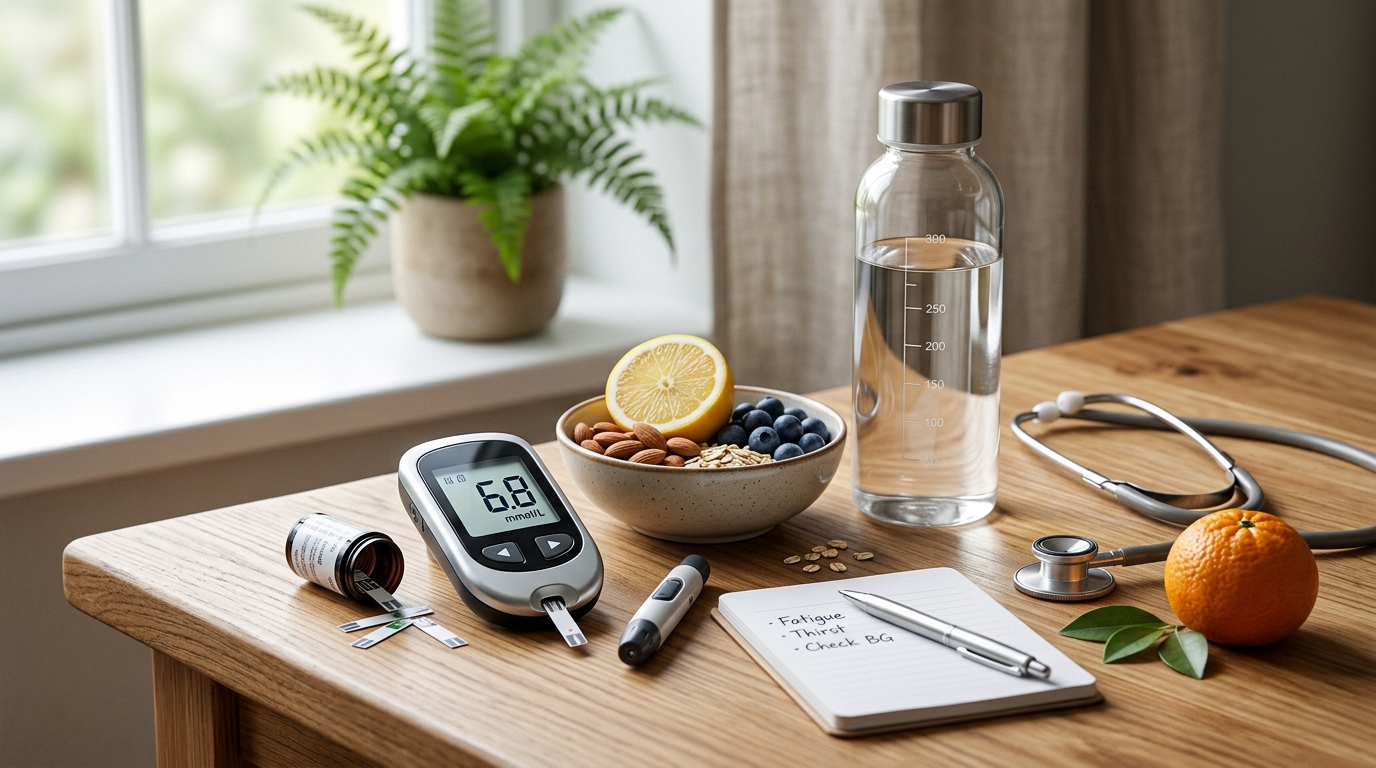
Write down what you’re experiencing and how often. Note if you’re peeing more at night, feeling unusually thirsty, or noticing blurry vision. That pattern helps your doctor decide what to test.
Don’t try to diagnose yourself online. Many of these symptoms overlap with other conditions, like thyroid issues or anemia. Only a blood test can confirm diabetes.
If you’re diagnosed, know that type 2 diabetes is manageable. Lifestyle changes, medication, and regular monitoring can keep blood sugar in a healthy range and prevent complications.
Conclusion
Type 2 diabetes symptoms are easy to miss because they build slowly. Pay attention to frequent urination, thirst, fatigue, blurry vision, and slow-healing wounds. If something feels off, get a blood sugar test. It’s quick, cheap, and could save you years of problems.
Q: What are the earliest signs of type 2 diabetes?
The earliest signs often include increased thirst, frequent urination (especially at night), and unexplained fatigue. Some people also notice blurry vision or slow-healing cuts. These symptoms can be subtle and develop gradually, so many people miss them. If you have risk factors like a family history or excess weight, ask your doctor about screening.
Q: Can type 2 diabetes go away?
Type 2 diabetes can go into remission, but it doesn’t disappear permanently. With significant weight loss, dietary changes, and exercise, some people achieve normal blood sugar levels without medication. However, remission requires ongoing lifestyle management. If old habits return, blood sugar often rises again. Regular monitoring and checkups are still important.
Q: How is type 2 diabetes diagnosed?
Doctors use blood tests: fasting plasma glucose, oral glucose tolerance test, or hemoglobin A1C. An A1C of 6.5% or higher on two separate tests usually means diabetes. A fasting glucose of 126 mg/dL or higher also indicates diabetes. Prediabetes is diagnosed with an A1C between 5.7% and 6.4%.
Q: What happens if type 2 diabetes is left untreated?
Untreated type 2 diabetes can lead to serious complications: heart disease, stroke, kidney damage, nerve damage, and vision loss. High blood sugar also increases the risk of infections and slow wound healing. Over time, these issues can become irreversible. Early treatment and lifestyle changes greatly reduce these risks.
Q: Are there symptoms of type 2 diabetes that only women experience?
Women may experience more frequent vaginal yeast infections or urinary tract infections due to high blood sugar. They might also notice increased thirst and urination, but those aren’t unique to women. Polycystic ovary syndrome (PCOS) raises the risk of type 2 diabetes, so women with PCOS should be screened regularly.
Article Was Generated By AI.