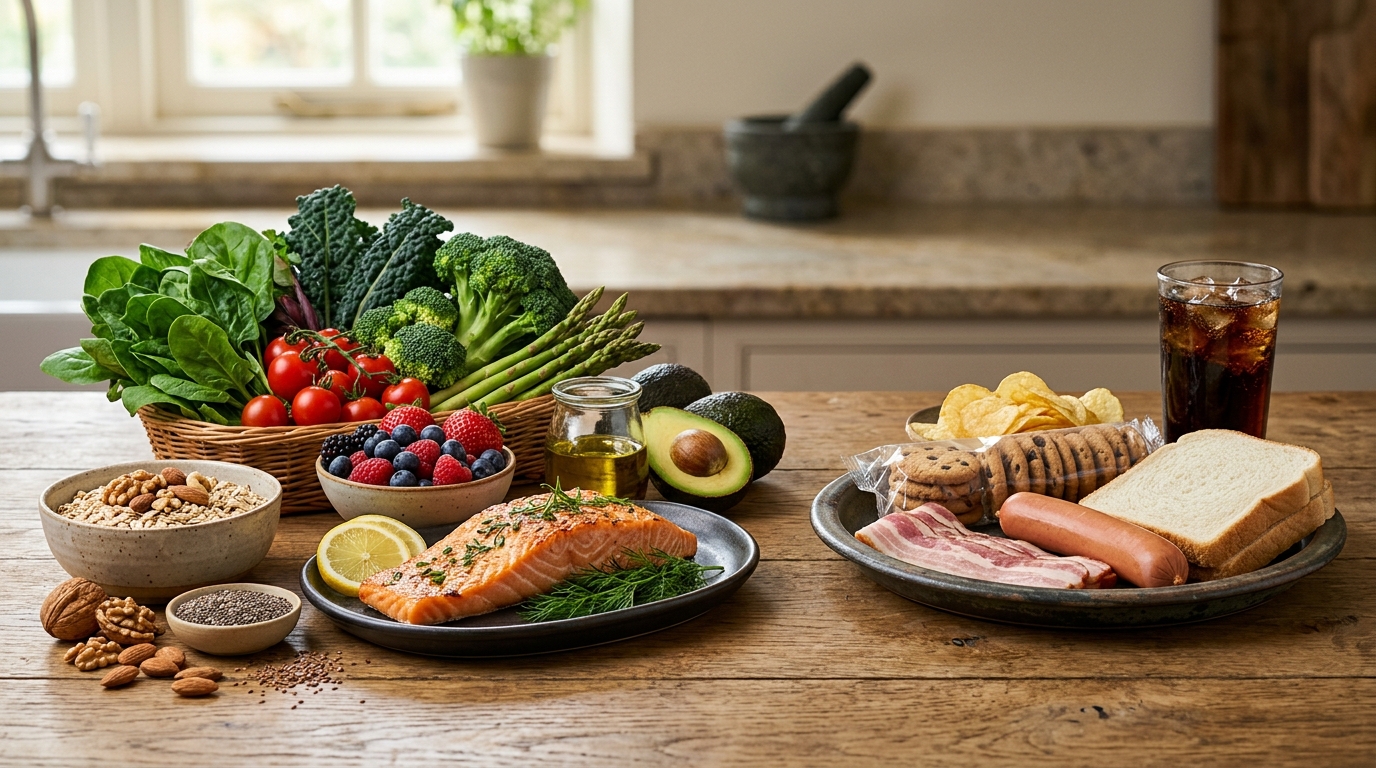
Heart disease remains the leading cause of death worldwide, but what you put on your plate can significantly lower your risk. A heart-healthy diet isn’t about deprivation; it’s about choosing foods that fuel your body and protect your cardiovascular system. In this guide, you’ll discover the basics of eating for a healthy heart, including which foods to enjoy and which to limit.
Why Diet Matters for Heart Health
Your heart works around the clock, pumping about 2,000 gallons of blood through your body every day. The food you eat directly affects your blood pressure, cholesterol levels, and inflammation, all of which impact heart health.
Research from the American Heart Association shows that a diet rich in fruits, vegetables, whole grains, and healthy fats can reduce your risk of heart disease by up to 30%. On the flip side, a diet high in processed foods, added sugars, and saturated fats can increase your risk by a similar amount.
The good news? You don’t have to overhaul your entire diet overnight. Small, consistent changes add up. Let’s break down the essentials.
Foods to Eat for a Healthy Heart
These food groups are your heart’s best friends. Aim to build most of your meals around them.
1. Fruits and Vegetables
Fruits and veggies are packed with vitamins, minerals, fiber, and antioxidants that fight inflammation and lower blood pressure. Aim for at least 5 servings a day, and vary the colors on your plate.
Berries, leafy greens, citrus fruits, and cruciferous vegetables like broccoli and Brussels sprouts are especially beneficial. A 2021 study in Circulation found that people who ate two servings of fruit and three servings of vegetables daily had a 13% lower risk of death from heart disease.
2. Whole Grains
Whole grains like oats, brown rice, quinoa, and whole-wheat bread are rich in soluble fiber, which helps lower LDL (bad) cholesterol. They also keep you full and steady your blood sugar.
Swap refined grains (white bread, white rice) for whole-grain versions. Even small swaps, like choosing oatmeal over sugary cereal, make a difference.
3. Healthy Fats
Not all fats are bad. Unsaturated fats, found in olive oil, avocados, nuts, seeds, and fatty fish, can improve cholesterol levels and reduce inflammation.
The Mediterranean diet, which emphasizes olive oil and fish, is linked to a 30% lower risk of heart disease. Try to eat fatty fish like salmon, mackerel, or sardines at least twice a week.
4. Lean Proteins
Choose skinless poultry, fish, beans, lentils, and tofu over red and processed meats. Plant-based proteins are especially heart-friendly because they’re low in saturated fat and high in fiber.
If you eat red meat, limit it to once a week and choose lean cuts like sirloin or tenderloin. Processed meats like bacon, sausage, and deli meats are best avoided.
5. Low-Fat Dairy
Dairy can be part of a heart-healthy diet if you choose low-fat or fat-free options. Milk, yogurt, and cheese provide calcium and protein without the saturated fat.
Greek yogurt is a great choice because it’s high in protein and low in sugar. Just watch out for flavored yogurts, which can pack as much sugar as a candy bar.
Foods to Avoid or Limit
These foods can raise your cholesterol, blood pressure, and inflammation. You don’t have to eliminate them completely, but cutting back makes a big difference.
1. Processed Meats
Bacon, hot dogs, sausage, and deli meats are high in sodium, saturated fat, and preservatives like nitrates. The World Health Organization classifies processed meat as a Group 1 carcinogen, and regular consumption is linked to a 42% higher risk of heart disease.
Swap them for fresh poultry, fish, or plant proteins. If you crave a sandwich, try sliced turkey breast or hummus instead.
2. Sugary Drinks
Soda, sweet tea, energy drinks, and fruit juice with added sugar are major sources of empty calories. They spike blood sugar and contribute to obesity, diabetes, and heart disease.
A 2019 study in Circulation found that drinking two or more sugary drinks per day increased the risk of death from heart disease by 31%. Stick to water, unsweetened tea, or sparkling water with a splash of citrus.
3. Refined Carbohydrates
White bread, white pasta, pastries, and many breakfast cereals are stripped of fiber and nutrients. They digest quickly, causing blood sugar spikes and promoting inflammation.
Choose whole-grain alternatives instead. For example, swap white rice for brown rice or quinoa, and white pasta for whole-wheat pasta.
4. Trans Fats and Highly Processed Oils
Trans fats, found in some fried foods, baked goods, and margarines, raise LDL cholesterol and lower HDL (good) cholesterol. They’re so harmful that the FDA banned artificial trans fats in 2018.
Check labels for “partially hydrogenated oils” and avoid them. Also limit highly processed oils like soybean and corn oil, which are high in omega-6 fatty acids and can promote inflammation when consumed in excess.
5. Excessive Salt
Too much sodium raises blood pressure, a major risk factor for heart disease. The American Heart Association recommends no more than 2,300 mg per day, ideally 1,500 mg for most adults.
Processed foods, canned soups, and restaurant meals are the biggest culprits. Cook at home, use herbs and spices for flavor, and read labels to choose low-sodium options.
Practical Tips for Eating Heart-Healthy
Knowing what to eat is one thing; putting it into practice is another. Here are some simple strategies to make heart-healthy eating a habit.
- Plan your meals: Spend 10 minutes each week planning meals around vegetables, whole grains, and lean proteins.
- Cook at home: Restaurant meals are often loaded with salt, sugar, and unhealthy fats. Cooking at home gives you control.
- Read labels: Look for foods with short ingredient lists and no added sugars or partially hydrogenated oils.
- Snack smart: Keep nuts, fruit, and yogurt on hand instead of chips and cookies.
- Stay hydrated: Drink water throughout the day. Sometimes thirst masquerades as hunger.
- Make gradual changes: Swap one unhealthy item per week. Small steps lead to lasting habits.
In practice, many people find that focusing on what they can add (like more veggies) rather than what they must remove makes the transition easier.
Conclusion
A heart-healthy diet is built on whole foods: fruits, vegetables, whole grains, healthy fats, and lean proteins. Limit processed meats, sugary drinks, refined carbs, trans fats, and excess salt. You don’t need to be perfect. Aim for progress, not perfection. Your heart will thank you.
Q: What is the single best food for heart health?
There’s no single magic food, but fatty fish like salmon is a top choice. It’s rich in omega-3 fatty acids, which lower inflammation and reduce the risk of heart rhythm disorders. Aim for two servings per week. Other standout foods include oats, berries, leafy greens, and nuts.
Q: Can I still eat red meat on a heart-healthy diet?
Yes, but limit it. Choose lean cuts like sirloin or tenderloin and keep portions to about 3 ounces. Eat red meat no more than once a week. Avoid processed meats like bacon and sausage entirely, as they’re strongly linked to heart disease.
Q: How long does it take to see improvements in heart health from diet changes?
Some changes happen quickly. Blood pressure can drop within weeks of reducing sodium. Cholesterol improvements may take 3 to 6 months of consistent healthy eating. Long-term benefits, like reduced heart attack risk, build over years. Stick with it.
Q: Are eggs bad for your heart?
For most people, eggs are fine in moderation. One egg a day doesn’t increase heart disease risk in healthy individuals. Eggs are a good source of protein and nutrients. However, if you have diabetes or high cholesterol, talk to your doctor about your egg intake.
Q: What’s the best oil for heart health?
Olive oil, especially extra virgin, is a top choice. It’s high in monounsaturated fats and antioxidants that reduce inflammation. Other good options include avocado oil and canola oil. Avoid partially hydrogenated oils and limit fried foods.
Article Was Generated By AI.