About 38 million Americans live with diabetes, according to the CDC’s 2024 National Diabetes Statistics Report, and roughly 90 to 95 percent of them have type 2. Type 1 accounts for just 5 to 10 percent. Both conditions share a name, a hallmark symptom (high blood sugar), and serious long-term risks. But the biology behind them, who gets them, and how they’re treated look very different.
Getting the distinction right matters. A misdiagnosis can delay the right treatment by months or years and raise the risk of complications. Here’s how the two types actually differ, from cause to daily management.
What’s Actually Happening in Your Body
Insulin is a hormone made by beta cells in your pancreas. It acts like a key that lets glucose move from your bloodstream into your cells for energy. When that system breaks down, blood sugar rises. The way it breaks down is the core difference between type 1 and type 2.
Type 1: An Immune System Attack
In type 1 diabetes, your immune system mistakenly attacks and destroys the beta cells that produce insulin. Once enough cells are gone, your body can’t make insulin at all. This is an autoimmune process, not a lifestyle outcome.
Researchers don’t know exactly what triggers it, though genetics and environmental factors like viral infections are likely involved. The American Diabetes Association notes that type 1 can develop at any age, but it most often appears in children, teens, and young adults.
Type 2: Insulin Resistance and Burnout
In type 2 diabetes, your body still makes insulin, at least early on. The problem is that your cells stop responding to it well, a condition called insulin resistance. Your pancreas compensates by pumping out more insulin, and over time it can’t keep up.
Dr. Ralph DeFronzo, a diabetes researcher at UT Health San Antonio, has described type 2 as a combination of at least eight underlying defects, not just one. That complexity is why treatment often involves multiple approaches at once.
Who Gets Which Type
Type 1 and type 2 don’t split cleanly along age lines anymore. Adults can and do develop type 1, and rising childhood obesity rates mean more kids are being diagnosed with type 2.
Still, patterns exist. Type 1 tends to show up earlier and isn’t linked to body weight. Type 2 is strongly associated with excess weight, especially around the abdomen, and is more common in adults over 45.
Other risk factors for type 2 include:
- A family history of type 2 diabetes
- Being physically inactive fewer than three times a week
- Having had gestational diabetes during pregnancy
- Being African American, Hispanic, Native American, or Asian American
- Having prediabetes, which affects about 98 million U.S. adults
Type 1 doesn’t have the same lifestyle-linked risk profile. Having a parent or sibling with type 1 raises your risk slightly, but most people who develop it have no family history at all.
Symptoms: Similar Surface, Different Speed
Both types cause high blood sugar, so the classic symptoms overlap: excessive thirst, frequent urination, fatigue, and blurred vision. The speed and severity differ.
Type 1 symptoms often come on fast, sometimes over days or weeks. Without insulin, the body starts burning fat for fuel, producing ketones that can build up to dangerous levels. This is diabetic ketoacidosis (DKA), a medical emergency that lands roughly 30 percent of newly diagnosed type 1 patients in the hospital, according to research published in Diabetes Care.
Type 2 symptoms develop slowly, often over years. Many people have no symptoms at all and find out through routine blood work. That’s why the CDC estimates about 8.7 million Americans have type 2 diabetes but don’t know it.
Warning Signs You Shouldn’t Ignore
Unexplained weight loss, especially with heavy thirst and frequent urination, warrants a doctor’s visit quickly. So does numbness or tingling in your hands or feet, which can signal nerve damage from prolonged high blood sugar.
Slow-healing wounds and recurring infections, particularly yeast infections or urinary tract infections, are also common red flags for type 2.
How Diagnosis Works
Doctors use the same basic tests to diagnose both types. A fasting blood glucose of 126 mg/dL or higher, a random glucose of 200 mg/dL or higher with symptoms, or an A1C of 6.5 percent or above all point to diabetes.
The tricky part is telling the two types apart. A doctor may check for diabetes-related autoantibodies, which show up in type 1 but not type 2. C-peptide levels, a marker of how much insulin your pancreas makes, also help. Low C-peptide suggests type 1.
In practice, adults diagnosed with diabetes are sometimes assumed to have type 2 by default. That assumption is wrong in a meaningful number of cases. A 2023 study in Diabetes Care found that nearly 4 in 10 adults with type 1 diabetes were diagnosed after age 30, and many were initially misclassified.
Treatment: Two Very Different Daily Routines
Because the underlying problems differ, so does the treatment.
Managing Type 1
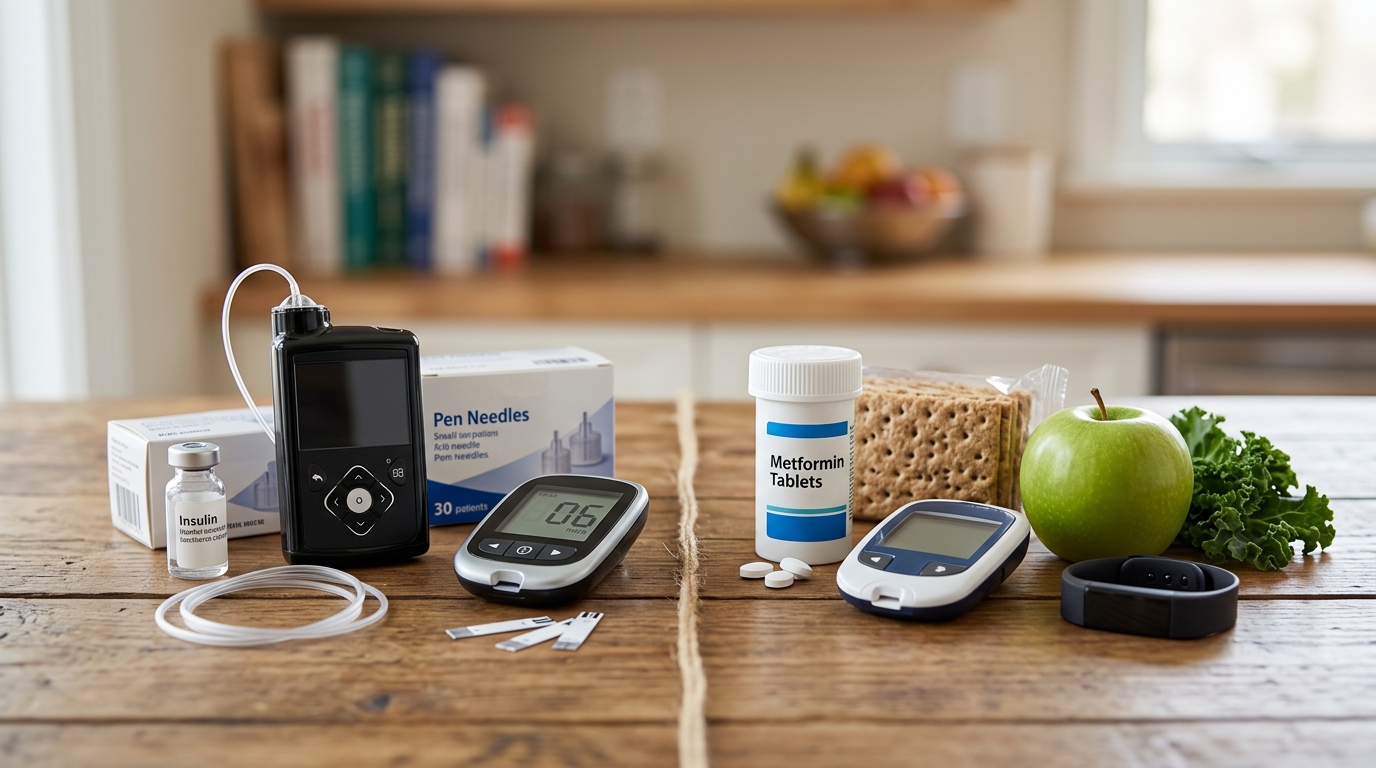
Type 1 requires insulin for survival. There’s no way around it. People with type 1 either take multiple daily injections or use an insulin pump, and they check blood sugar several times a day or use a continuous glucose monitor (CGM).
Counting carbohydrates, timing meals around insulin doses, and adjusting for exercise all become part of daily life. It’s a demanding routine, but technology has improved it. Modern hybrid closed-loop systems can automatically adjust insulin delivery based on CGM readings.
Managing Type 2
Type 2 treatment usually starts with lifestyle changes: losing 5 to 7 percent of body weight, getting 150 minutes of moderate exercise weekly, and eating a balanced diet. The CDC’s National Diabetes Prevention Program showed that these steps cut the risk of progressing from prediabetes to type 2 by 58 percent.
When lifestyle alone isn’t enough, doctors add medication. Metformin remains the most common first-line drug. Newer options like GLP-1 receptor agonists (Ozempic, Trulicity) and SGLT2 inhibitors (Jardiance, Farxiga) have changed the game, offering weight loss and heart and kidney protection alongside blood sugar control.
Some people with type 2 eventually need insulin too, especially if the pancreas has been struggling for years. Needing insulin doesn’t mean you failed at managing your condition. It means the disease progressed.
Can Type 2 Diabetes Be Reversed?
Type 1 cannot be reversed or cured with current medicine. The beta cells are gone.
Type 2 is different. Remission is possible for some people, particularly those diagnosed recently. The DiRECT trial in the UK found that nearly half of participants who followed a structured low-calorie diet achieved remission at one year, defined as an A1C under 6.5 percent without medication.
Remission doesn’t mean cured, though. Blood sugar can rise again if weight returns. It’s better described as a pause than an ending.
The Bottom Line on Telling Them Apart
Type 1 is an autoimmune disease that destroys insulin-producing cells. Type 2 is a metabolic condition rooted in insulin resistance. One requires insulin from day one. The other often responds to lifestyle changes and oral medication first.
If you’ve been diagnosed with either, the most useful next step is understanding your specific numbers: A1C, fasting glucose, and for some, antibody and C-peptide tests. Those numbers shape your treatment far more than the label on your chart.
Conclusion
Type 1 and type 2 diabetes share symptoms and risks, but they’re driven by different biology and managed in different ways. Type 1 needs insulin for life. Type 2 often responds to weight loss, diet, exercise, and medication, and can sometimes go into remission. If you’re unsure which type you have, ask your doctor about antibody and C-peptide testing. Getting the right diagnosis is the first step toward the right treatment.
Q: Can you have both type 1 and type 2 diabetes?
It’s rare but possible. Some people with type 1 develop insulin resistance over time, a pattern sometimes called double diabetes. Others with type 2 may later develop autoimmune beta cell loss. Doctors treat these cases based on which problem is dominant, usually with insulin plus medications that improve insulin sensitivity.
Q: Is type 1 diabetes caused by eating too much sugar?
No. Type 1 is an autoimmune disease where the immune system attacks insulin-producing cells. Diet and sugar intake don’t cause it. Genetics and environmental triggers like viral infections are the leading theories. This is one of the most persistent myths about diabetes and it can lead to unfair blame placed on people with type 1.
Q: Which type of diabetes is more dangerous?
Both can be dangerous if untreated. Type 1 can cause diabetic ketoacidosis within days without insulin, which is life-threatening. Type 2 tends to cause complications slowly over years, including heart disease, kidney failure, and nerve damage. With proper treatment, both types can be managed well and people can live full, long lives.
Q: Can type 2 diabetes turn into type 1?
No. They’re separate conditions with different causes. Type 2 doesn’t convert into type 1. However, some people with type 2 eventually need insulin because their pancreas produces less over time. That’s disease progression, not a change in type. Your diagnosis stays the same even if treatment changes.
Q: How do doctors tell type 1 and type 2 apart?
Blood tests do the work. Doctors check for autoantibodies like GAD65, which appear in type 1 but not type 2. They may also measure C-peptide, a marker of insulin production. Low C-peptide points to type 1. These tests matter because adults with type 1 are sometimes misdiagnosed as type 2 at first.
Article Was Generated By AI.