Your car rarely dies without warning. It usually whispers first: a new rattle, a burning smell, a dashboard light you’ve been ignoring for three weeks. Catching those early signals is the difference between a $200 repair and a $2,000 tow-and-replace bill. The average roadside breakdown costs drivers over $400 in towing and emergency repairs, according to AAA, and most of those failures started as a symptom someone brushed off.
Here’s what to watch for, why it matters, and when to stop driving.
Dashboard Lights You Shouldn’t Ignore
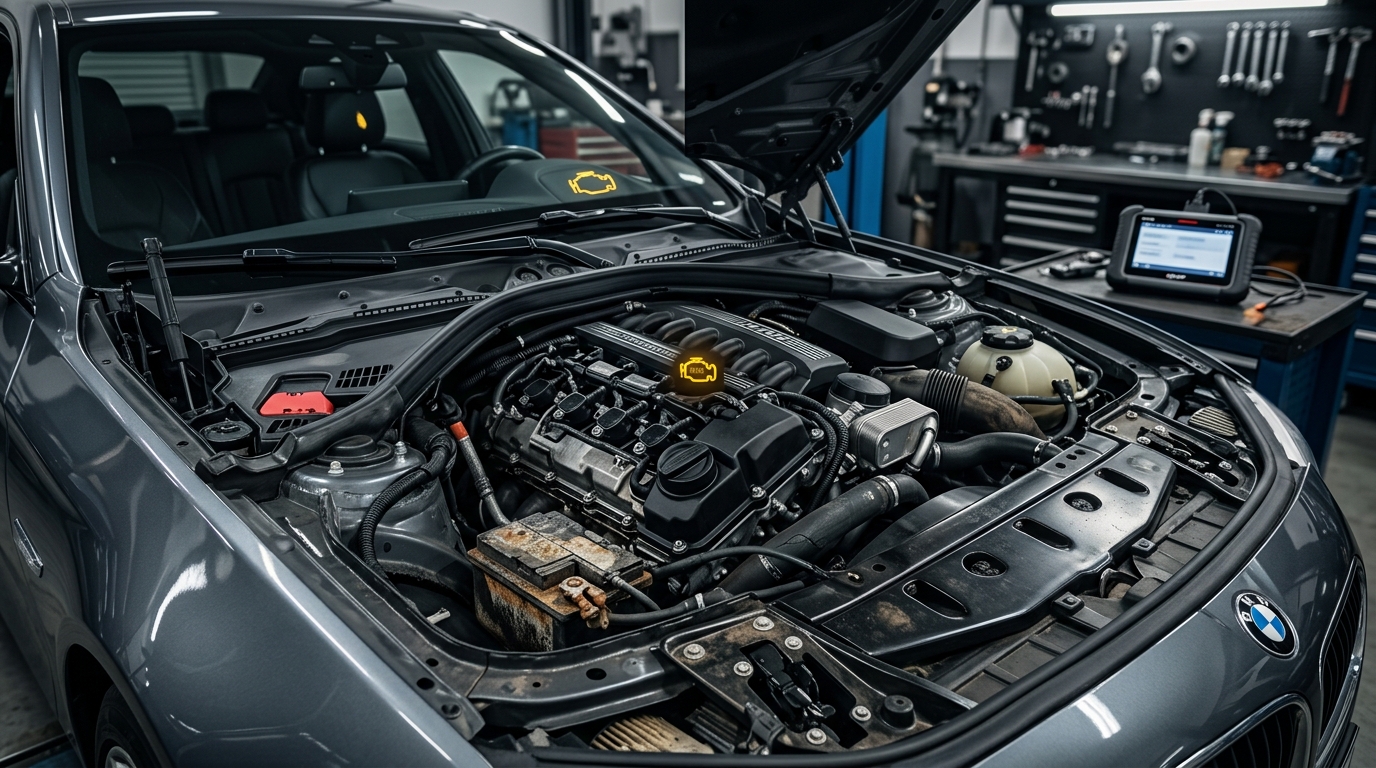
Your dashboard is the most honest communicator your car has. The check engine light alone covers more than 200 possible fault codes, from a loose gas cap to a failing catalytic converter. A steady light means get it scanned within a week. A flashing light means stop driving now.
Red warning lights are never negotiable. Oil pressure, coolant temperature, battery voltage, and brake system lights all signal conditions that can destroy an engine or leave you without brakes. If one comes on and stays on, pull over safely and shut the engine off.
Amber vs. Red: What the Color Tells You
Amber or yellow means service soon. Your car can usually be driven carefully to a shop. Red means stop immediately. Ignoring a red oil light for even two miles can seize an engine, turning a $150 sensor fix into a $6,000 replacement.
In practice, mechanics see the same pattern constantly: drivers wait until a light starts blinking or the car won’t start. By then, the cheap fix window has closed.
Sounds and Vibrations That Signal Trouble
Cars make noise. The trick is knowing which noises are normal and which are your car asking for help. New noises almost always mean something changed, and something changing is rarely good.
Listen for these specific sounds:
- Squealing under the hood: usually a worn serpentine belt or a failing pulley. It often gets worse when you start the car cold or turn on the AC.
- Grinding when braking: your brake pads are worn through and metal is contacting metal. Every mile driven grinds down the rotor, which costs three times more to replace.
- Rhythmic clicking on turns: a classic sign of a worn CV joint. Left alone, the axle can fail completely and leave you stranded.
- Deep rumbling from underneath: often an exhaust leak or a failing wheel bearing. A wheel bearing can seize and cause a wheel to lock up at speed.
- Knocking from the engine: this is the one you never ignore. Engine knock can indicate low oil, bad fuel, or internal damage that gets expensive fast.
Vibrations matter too. A steering wheel that shakes at 60 mph often points to unbalanced tires or worn suspension components. A vibration that appears only when braking usually means warped rotors. Both are cheap to fix early and costly to ignore.
Smells That Point to Specific Failures
Your nose can diagnose problems your eyes can’t see. Each smell maps to a specific system, and recognizing them saves time and money at the shop.
Sweet, Syrup-Like Smell
That’s coolant, and it usually means a leak in the radiator, hoses, or heater core. Coolant leaks lead to overheating, and overheating warps cylinder heads. A $50 hose replacement beats a $2,500 head gasket job every time.
Burning Rubber or Acrid Plastic
Burning rubber often means a belt is slipping or a hose is touching something hot. An acrid, electrical burning smell can indicate wiring shorting out, which is a fire risk. Pull over and inspect if you smell this.
Gasoline Odor
Smelling raw fuel while driving or after parking points to a leak in the fuel line, injector, or tank. Gasoline vapor near a hot exhaust is genuinely dangerous. Don’t park in a garage until it’s checked.
Rotten Egg Smell
That sulfur smell comes from a failing catalytic converter or an engine running too rich. It won’t strand you tomorrow, but it will fail an emissions test and can damage other components over time.
Performance Changes You Can Feel
Sometimes there’s no noise and no smell, just a car that doesn’t feel right. Trust that instinct. Subtle changes in how your car drives are often the earliest warning signs of all.
Watch for these drivability shifts:
- Rough idling or stalling at stops. Often a dirty throttle body, failing spark plugs, or a vacuum leak.
- Slow acceleration or hesitation. Frequently a clogged fuel filter, failing fuel pump, or worn ignition coils.
- Hard gear shifts or slipping. Transmission fluid may be low or burnt. Transmission repairs average $1,800 to $3,400, so early attention pays.
- Pulling to one side. Usually alignment or brake caliper issues. A sticking caliper can overheat and fail.
- Poor fuel economy. A sudden 15% drop in mileage often signals an oxygen sensor or fuel system problem.
According to Consumer Reports, transmission and engine problems top the list of the most expensive repairs drivers face. Nearly every one of them starts with a symptom that was noticeable weeks earlier.
Fluid Leaks and What They Tell You
Any puddle under your car deserves a second look. The color alone narrows down the source fast.
Brown or black spots usually mean engine oil. Red or pink fluid is transmission or power steering. Green, orange, or pinkish-sweet fluid is coolant. Clear watery puddles are often just AC condensation, which is harmless.
Small leaks become big ones. A slow oil seep that adds a quart every 1,000 miles can turn into a blown seal on a highway trip. Check your fluid levels monthly, and note any drop that seems faster than usual.
When to Stop Driving Immediately
Some symptoms mean park it now. Driving through them risks your safety and your wallet.
Stop driving if you see a red warning light, smell burning, feel the brakes grind or the pedal sink to the floor, notice smoke from the hood, or experience steering that suddenly gets heavy. These aren’t maintenance items. They’re emergencies.
For everything else, the rule is simple: book a diagnostic within a week. Most shops charge $100 to $150 for a diagnostic scan, and that fee often goes toward the repair. Waiting rarely saves money. It usually just changes which part fails first.
Conclusion
Your car tells you what’s wrong long before it quits. Lights, noises, smells, leaks, and small changes in how it drives are all early warnings. Pay attention, act within days instead of months, and you’ll spend far less on repairs. The cheapest breakdown is the one you prevented.
Q: What’s the most common early sign a car needs repair?
New or unusual noises top the list, especially grinding brakes, squealing belts, and clicking on turns. Dashboard warning lights come second. Both give you days or weeks of lead time before a full breakdown. If you notice a sound that wasn’t there last month, get it checked within a week rather than waiting for it to get worse.
Q: Can I keep driving with the check engine light on?
If the light is steady, you can usually drive carefully to a shop within a few days. If it’s flashing, stop driving immediately. A flashing check engine light typically means a misfire that’s dumping raw fuel into the catalytic converter, which can destroy it in minutes. That turns a $200 repair into a $2,000 one.
Q: How much does a diagnostic scan cost?
Most independent shops charge $100 to $150 for a full diagnostic, and many apply that fee toward the repair if you approve the work. Auto parts stores often scan check engine codes for free, which gives you a starting point. That free scan won’t diagnose the underlying cause, but it tells you whether the issue is urgent.
Q: What does a sweet smell from my car mean?
A sweet, syrup-like odor almost always means a coolant leak. Common sources include radiator hoses, the water pump, the heater core, or the radiator itself. Coolant leaks lead to overheating, and overheating can warp cylinder heads. A hose replacement might cost $50 to $150, while a head gasket job often runs $2,000 or more, so fix it early.
Q: How often should I check my car’s fluids?
Check oil, coolant, brake fluid, and windshield washer fluid once a month, and always before a long road trip. Transmission fluid is worth checking every few months or whenever shifting feels off. Fluid levels drop for a reason, so a consistent loss between checks points to a leak that needs attention before it becomes a bigger failure.
Article Was Generated By AI.