Choosing the right home improvement store can make or break your project. The wrong store means wasted trips, missing parts, and higher costs. The right one saves you time, money, and frustration. With so many options, from big-box chains to local hardware stores, you need a strategy.
Start with Your Project’s Scope
Before you step into any store, define your project. A leaky faucet fix is different from a full bathroom remodel. The scope determines what you need: specialized tools, building materials, or just a replacement part.
For small repairs, a local hardware store often works best. They stock common parts and offer quick advice. For large projects, you’ll likely need a big-box store with bulk inventory and delivery services.
In practice, contractors often split their shopping. They buy lumber and drywall from a big-box store and specialty items like tile or fixtures from a dedicated supplier. That approach balances cost and quality.
Compare Inventory and Availability
Not all stores carry the same brands or sizes. A store might have 2×4 lumber but not the pressure-treated version you need for a deck. Check online inventory before you go.
Home Depot and Lowe’s typically list real-time stock levels on their websites. Smaller stores may not, so a phone call saves a trip. If you’re buying 50 bags of concrete, call ahead to confirm they have enough.
Specialty vs. General Inventory
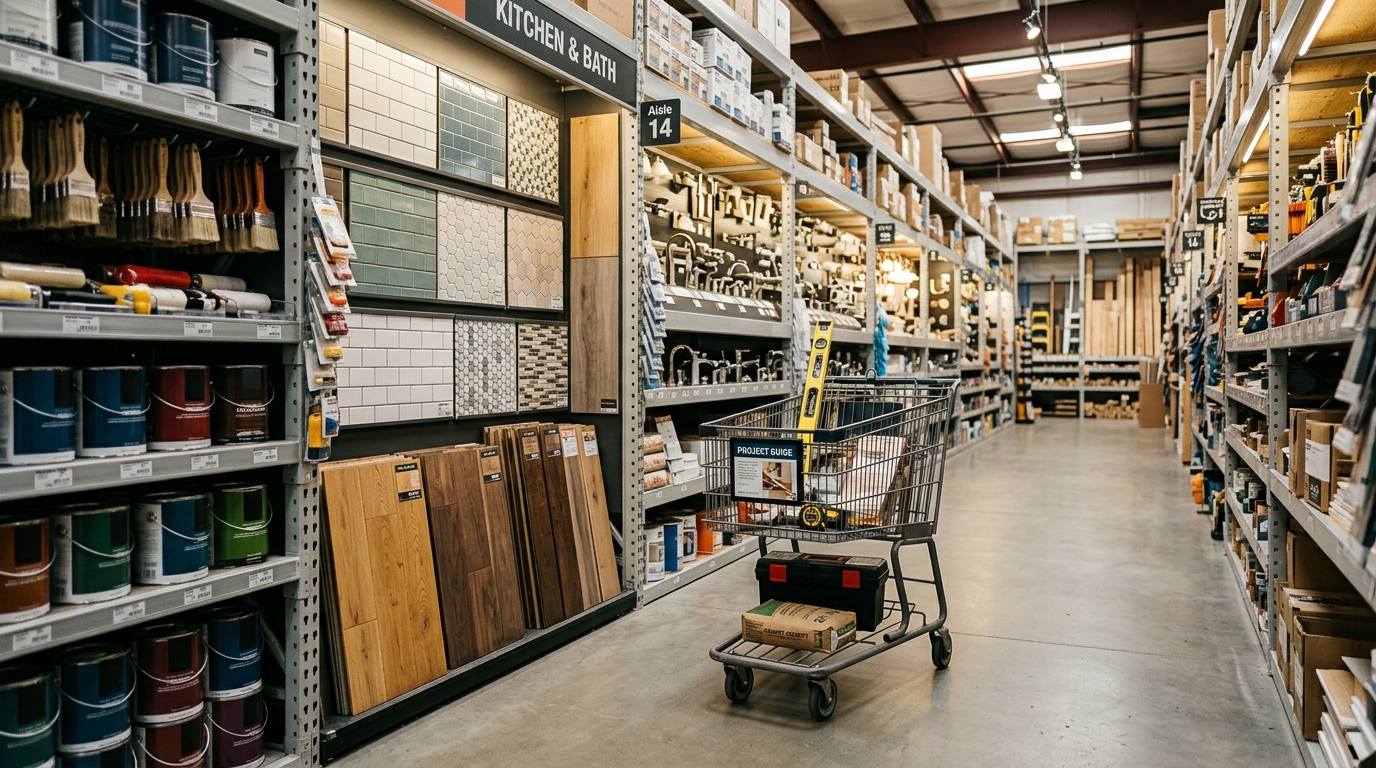
General stores like Ace Hardware carry a mix of plumbing, electrical, and paint supplies. Specialty stores, such as Floor & Decor for tile or Ferguson for plumbing, go deep in one category. For a kitchen remodel, a specialty store might have 200 tile options versus 30 at a big-box store.
That depth matters when you need a specific color or finish. But specialty stores often cost more. Weigh the trade-off between selection and price.
Evaluate Pricing and Promotions
Prices vary widely for identical items. A 2-gallon shop vacuum might cost $60 at one store and $80 at another. That’s a 33% difference. Over a whole project, those gaps add up.
Big-box stores run frequent promotions, especially around holidays. Lowe’s and Home Depot offer 10% off for military members and veterans every day. They also price-match competitors, including online retailers like Amazon.
Local stores may not price-match, but they often have lower everyday prices on small items. A single screw or washer can cost 10 cents less at a hardware store. For bulk purchases, ask for a contractor discount. Many stores offer 5% to 10% off for pros, and some extend it to serious DIYers.
Assess Staff Expertise and Service
You’re not just buying products; you’re buying help. A knowledgeable employee can save you hours. At a local hardware store, the owner might have 20 years of plumbing experience. At a big-box store, staff turnover is high, and expertise varies.
In practice, the best time to visit is weekday mornings. That’s when seasoned staff are on the floor, not the weekend rush. Ask specific questions: “What’s the difference between PEX and copper for this application?” A good answer shows real knowledge.
Delivery and installation services also matter. Home Depot offers appliance installation starting at $99. Lowe’s provides similar services. If you’re buying a new water heater, installation can cost $300 to $500 extra. Factor that into your budget.
Consider Location and Convenience
A store 30 minutes away might have better prices, but the drive costs you time and gas. If you need three trips for a project, that’s 3 hours and $15 in fuel. Sometimes the closer store wins.
Check store hours. Some local stores close at 5 PM on weekdays, while big-box stores stay open until 10 PM. If you work a 9-to-5 job, evening access is key.
Also, look for perks like curbside pickup. During the pandemic, both Home Depot and Lowe’s expanded curbside service. It’s still available at most locations. You order online, park, and they load your car. That’s a huge time saver for bulky items like plywood.
Check Return Policies and Warranties
Return policies differ. Home Depot accepts returns within 90 days, while Lowe’s gives you 90 days for most items. But some categories, like paint or custom blinds, are final sale. Always ask before buying.
Local stores may have stricter policies, like 30 days with a receipt. If you’re unsure about a product, a generous return policy reduces risk. You can buy extra tiles and return the unused ones.
Warranties also vary. A store might offer an extended warranty on power tools. Read the fine print. A 3-year extended warranty for $30 on a $200 drill might be worth it if you use it daily. For occasional use, skip it.
Use a Decision Checklist
When you’re standing in the aisle, it’s easy to forget what matters. Use this checklist to compare stores:
- Inventory: Do they have the specific brand, size, and quantity you need?
- Price: Is the total cost, including delivery, lower than competitors?
- Expertise: Can staff answer technical questions accurately?
- Convenience: How far is the store? What are their hours?
- Services: Do they offer delivery, installation, or tool rental?
- Return policy: How many days do you have? Are there restocking fees?
Score each store from 1 to 5 on these criteria. The highest total wins. This simple method removes emotion from the decision.
Conclusion
Choosing the right home improvement store comes down to your project’s needs. For a quick fix, a local hardware store with expert staff is hard to beat. For a major remodel, a big-box store with bulk inventory and delivery saves time and money. Always compare prices, check return policies, and visit on weekday mornings for the best help. With a little planning, you’ll avoid wasted trips and stay on budget.
Q: Is it cheaper to buy building materials from a big-box store or a local hardware store?
It depends on the item. Big-box stores often have lower prices on bulk materials like lumber and drywall, especially with contractor discounts. Local stores may be cheaper for small parts and offer better advice. For a large project, compare total costs including delivery. A 10% price difference on $5,000 in materials is $500, so it’s worth checking both.
Q: Can I return unused materials to a home improvement store?
Most stores accept returns within 90 days with a receipt, but policies vary. Home Depot and Lowe’s generally allow returns on unused items in original packaging. Custom-order items like mixed paint or cut lumber are often final sale. Always ask about the return policy before buying, and keep your receipt. Some stores charge a restocking fee on special orders.
Q: How do I know if a store’s staff is knowledgeable?
Ask a specific technical question about your project. For example, “What’s the difference between PEX and copper for this application?” A knowledgeable employee will give a detailed answer with pros and cons. Visit on weekday mornings when seasoned staff are more likely to be working. Local hardware stores often have staff with decades of trade experience.
Q: Do home improvement stores offer delivery and installation services?
Yes, most big-box stores offer both. Home Depot and Lowe’s provide delivery for large items like appliances and lumber, often for a fee starting around $79. Installation services are available for appliances, flooring, and windows. Costs vary by project. For example, water heater installation can add $300 to $500. Always get a quote before committing.
Q: What’s the best time to shop at a home improvement store?
Weekday mornings are ideal. Staff are less rushed and more experienced employees are usually on the floor. Weekend afternoons are the busiest, so you’ll wait longer for help. If you need advice, avoid holiday weekends when stores are packed. Also, check for early morning contractor hours, often from 6 AM to 8 AM, when you can get in and out quickly.
Article Was Generated By AI.