Used car prices have cooled from their 2022 peak, but financing still decides how much you actually pay. The average used vehicle loan in 2024 carried an APR near 11.9% for used cars, according to Experian’s State of the Automotive Finance Market report. A two-point rate difference on a $20,000, 60-month loan saves you roughly $1,100 over the life of the loan. Shopping smart matters more than ever.
Here’s how to line up an affordable loan before you ever step onto a dealer lot.
Check Your Credit Before You Shop
Your credit score sets the floor for every rate you’ll be offered. Pull your reports from AnnualCreditReport.com, which is free weekly through the official site, and dispute any errors before applying. A single misreported late payment can cost you a full rate tier.
Know where you stand. In 2024, Experian data showed super-prime borrowers (781 to 850) paid about 6.7% APR on used cars, while deep subprime borrowers paid over 21%. That gap is enormous on a five-year loan.
If your score is below 650, spend 60 to 90 days improving it. Pay down revolving balances below 30% utilization and avoid opening new accounts. Even a 40-point bump can move you into a cheaper tier.
Get Preapproved First
Preapproval from a bank or credit union gives you a rate ceiling before you negotiate. It also tells you your real budget. Apply with two or three lenders within a two-week window so the inquiries count as one scoring event under FICO’s rate-shopping rules.
Credit unions consistently beat banks on used car loans. Navy Federal, PenFed, and local credit unions frequently advertise used auto rates in the 5% to 7% range for qualified members. In practice, a preapproval letter also gives you cash-buyer leverage with the dealer.
Compare Rates From Multiple Sources
Don’t take the first offer. Rates vary wildly between lenders for the same borrower. Here’s where to look:
- Credit unions: Often the lowest rates, especially for members with 700+ scores.
- Online lenders: Companies like LightStream and Capital One Auto Finance offer fast quotes with no impact on your score for prequalification.
- Banks: Competitive if you have an existing relationship and direct deposit.
- Dealer financing: Convenient, but dealers often mark up the rate by 1 to 3 points and keep the difference.
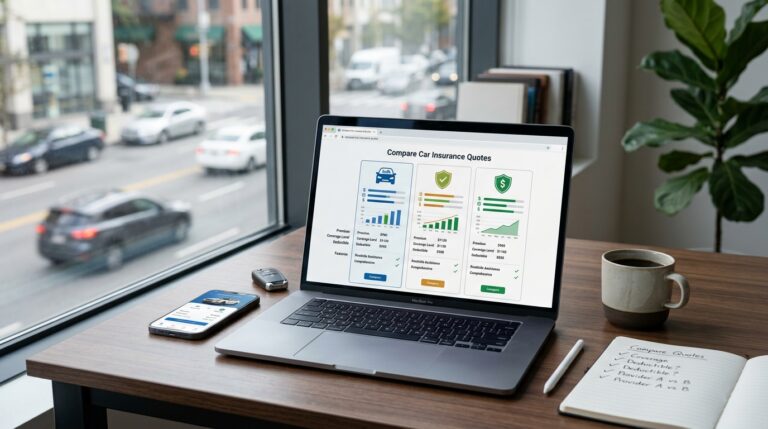
Use prequalification tools, which show estimated rates with a soft credit pull. Gather at least three quotes. Compare the APR, not the monthly payment, since lenders stretch terms to hide higher rates.
Watch the Dealer Finance Office
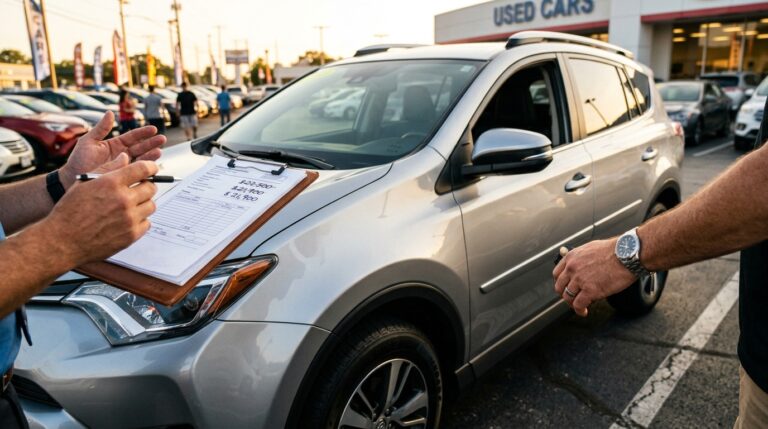
Dealers make money on financing, sometimes more than on the car. The finance manager may present a rate higher than what the lender approved, a practice called rate markup. Ask directly: “Is this the buy rate from the lender, or is there a markup?”
If you arrive with a preapproval, the dealer has to beat it to win your business. That flips the negotiation in your favor. Walk in with your number and let them compete.
Understand the Loan Terms That Actually Matter
The advertised rate isn’t the whole story. Four terms drive your real cost:
- APR: Includes interest plus fees. Compare this number, not the interest rate alone.
- Loan term: Longer terms lower payments but raise total interest. A 72-month loan on a used car often costs more than the car is worth by the end.
- Down payment: Aim for at least 10% to 20%. A larger down payment reduces negative equity, where you owe more than the car is worth.
- Fees: Origination, documentation, and prepayment penalties. Ask for a full fee breakdown in writing.
Used cars depreciate fast. A 60-month term is usually the sweet spot. Stretching to 84 months on a vehicle that’s already five years old is a recipe for being underwater.
Know the Age and Mileage Rules
Many lenders won’t finance cars older than 10 years or with over 100,000 miles. Some cap the loan term based on vehicle age. A 2015 sedan with 90,000 miles might only qualify for a 48-month loan at a higher rate.
Check the vehicle’s age and mileage against lender guidelines before you fall in love with a car. A private-party sale also limits your options, since some lenders only finance dealer purchases.
Improve Your Approval Odds and Rate
Small moves add up. A co-signer with strong credit can drop your rate by several points. Adding a 20% down payment signals lower risk to lenders and often unlocks better tiers.
Document your income. Lenders want proof of stable earnings, and a clean pay stub history helps. If you’re self-employed, two years of tax returns strengthen your file.
Refinancing is another option. If you already have a loan at a high rate, refinancing after 12 months of on-time payments can cut your APR. Rates dropped for many borrowers in 2024 as the Fed eased, so a refinance quote is worth 15 minutes of your time.
Avoid These Common Mistakes
Don’t finance add-ons like extended warranties, gap insurance, or paint protection into the loan without comparing prices. Dealers mark these up heavily.
Don’t shop by monthly payment alone. A $350 payment on a 72-month loan can cost thousands more than a $420 payment on a 48-month loan. And never sign without reading the full contract, including the total finance charge.
Conclusion
Affordable used car loans come from preparation, not luck. Check your credit, get preapproved with a credit union or online lender, and collect at least three quotes before you negotiate. Compare APRs and total costs, not monthly payments. A few hours of homework can save you over $1,000 across the life of the loan.
Q: What credit score do I need for an affordable used car loan?
Most lenders offer their best rates to borrowers with scores of 700 or higher. Experian’s 2024 data shows super-prime borrowers paid around 6.7% APR on used cars, while subprime borrowers paid well over 15%. You can still get approved below 650, but expect higher rates and consider a co-signer or a larger down payment to offset the risk.
Q: Is it better to finance through a dealer or a bank?
A bank or credit union usually beats dealer financing because dealers often add a rate markup of 1 to 3 points. Getting preapproved first gives you a benchmark and leverage. If the dealer can beat your preapproval rate, take it. Otherwise, stick with your outside lender and keep the savings.
Q: How much should I put down on a used car loan?
Aim for 10% to 20% down. A 20% down payment lowers your loan balance, reduces monthly payments, and helps you avoid negative equity as the car depreciates. It also signals lower risk to lenders, which can unlock better rate tiers. On a $20,000 car, that’s $2,000 to $4,000 down.
Q: Can I get a loan for a car with over 100,000 miles?
Some lenders will finance high-mileage cars, but options shrink and rates rise. Many banks cap financing at 100,000 miles or vehicles older than 10 years. Credit unions tend to be more flexible than large banks. Check age and mileage rules before shopping so you don’t waste time on a car you can’t finance affordably.
Q: Does shopping for auto loans hurt my credit score?
Multiple auto loan inquiries within a 14-day window count as a single inquiry under FICO’s rate-shopping rules. That means you can compare several lenders without stacking damage. Prequalification tools use soft pulls that don’t affect your score at all, so start there before submitting full applications.
Article Was Generated By AI.