Traveling with kids doesn’t have to feel like a military operation. The families who come home relaxed usually aren’t the ones with the biggest budgets or the most elaborate itineraries. They’re the ones who planned around their children’s real needs instead of fighting them. These family travel tips cover what actually works, from packing and booking to managing meltdowns at 30,000 feet.
Book the Right Seats and Times Before Anything Else
Flight timing is the single biggest lever you control. A 6 a.m. departure means a 3:30 a.m. wake-up, which means overtired kids by 9 a.m. If you can, book flights that overlap with your child’s usual nap or bedtime. Red-eyes work for some families and backfire for others, so test it on a short trip first.
Seat selection matters more than most parents expect. Book a row together when possible. If you’re flying with a lap infant, request a bassinet seat on long-haul routes; airlines like British Airways and Qantas offer them on select aircraft, usually free with advance notice. Bulkhead rows give you floor space for a toddler to stand, which buys you 20 quiet minutes.
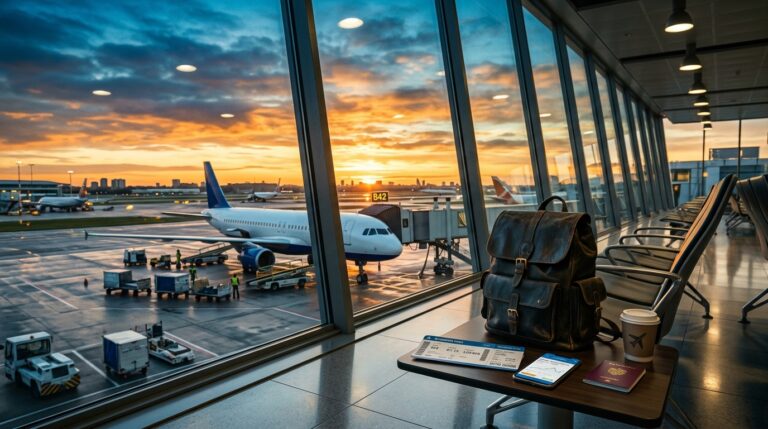
In practice, the families who breeze through airports share one habit: they arrive early enough to absorb delays without panic. Aim for 2 hours before domestic flights and 3 for international. That buffer absorbs the diaper blowout, the lost stuffed animal, and the security line that snakes twice around the terminal.
Pack Less Than You Think You Need
Every experienced traveling parent says the same thing: they packed too much. A good rule is to lay out everything you plan to bring, then remove a third. Laundry facilities exist almost everywhere. Hotels and vacation rentals often have washers, and a $6 load mid-trip beats hauling 10 extra outfits through three airports.
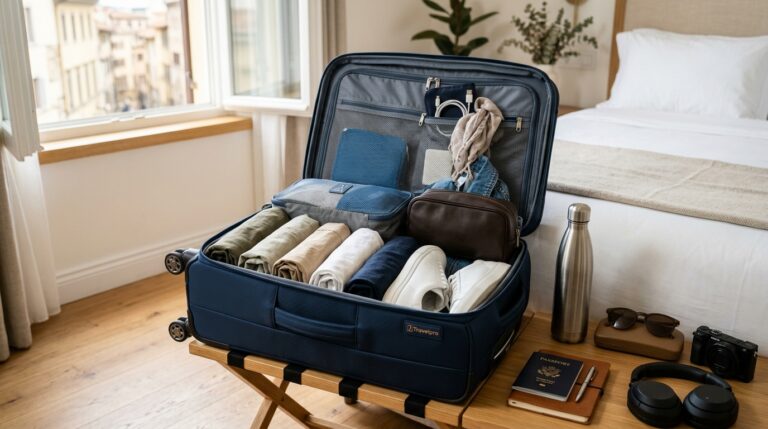
One carry-on per person, plus a shared personal item, keeps you mobile. Rolling backpacks beat wheeled suitcases for kids because they free up hands and fit under seats. Packing cubes add structure, and a labeled cube per child means you’re not excavating a shared bag at midnight.
Here’s a short list of items that earn their space on nearly every family trip:
- A small first-aid kit with children’s pain reliever, fever reducer, and bandages
- Two changes of clothes per child in the carry-on, even for short flights
- A refillable water bottle for each family member (empty through security)
- Snacks with protein, not just crackers, to prevent blood-sugar crashes
- A lightweight stroller that folds into an overhead bin if your child is under 4
- Comfort items: the specific blanket, the specific stuffed animal, nothing new
Don’t pack the whole toy box. Two or three novel small toys, saved for the flight, work better than a bag of familiar ones. Novelty is the currency of distraction.
Plan Around Sleep, Not Against It
Pediatric sleep researchers, including those at the Seattle Children’s Research Institute, consistently find that young children’s behavior and mood track closely with sleep duration. Skipping nap time to squeeze in one more museum usually costs you the afternoon and the dinner. Build the day around sleep windows instead of the other way around.
For babies and toddlers, a portable blackout shade and a white noise app can turn any hotel room into a nap-friendly cave. For older kids, a consistent bedtime, even on vacation, keeps the whole trip smoother. You can flex it by 30 to 45 minutes. You can’t flex it by three hours without paying for it the next day.
Time zones are the wild card. For a trip crossing more than three zones, start shifting bedtime 20 to 30 minutes earlier or later in the week before you leave. It’s not a cure, but it softens the landing. Kids adjust faster than adults in most cases, often within two to three days.
Use Food and Downtime as Your Secret Weapons
Hungry kids are a different species. The meltdown you’re blaming on the museum is often a meltdown about blood sugar. Keep a snack in your bag at all times, and eat before you’re hungry, not after. A 4 p.m. snack can rescue the whole evening.
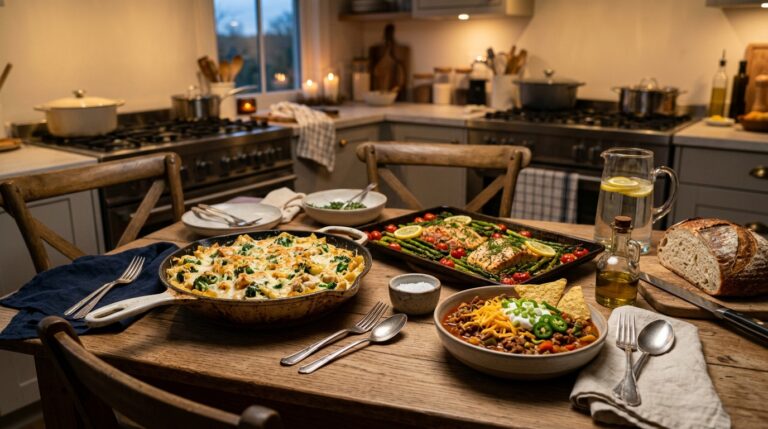
Book vacation rentals with kitchens for trips longer than four nights. Breakfast in saves money, saves time, and lets you feed picky eaters exactly what they’ll actually eat. A bowl of cereal at 7 a.m. in your pajamas beats a hotel buffet line at 8 a.m. in shoes.
Schedule one slow morning or afternoon every other day. The families who report the best trips aren’t the ones who saw the most. They’re the ones who built in blank space. A pool afternoon counts as a real activity. So does a picnic in a park. Kids remember unstructured time more fondly than they remember the third cathedral.
Manage the Airport and Flight Like a Pro
Airports are the pressure point of any family trip. TSA PreCheck, which costs $78 for five years for adults and is free for kids under 12 traveling with an enrolled adult, cuts the security line to minutes. That’s a small fee for a large reduction in stress.
Board when your zone is called, not before. Waiting on the jet bridge with a toddler is worse than waiting in the terminal with snacks and floor space. Once on board, wipe down the tray table, get the water bottle within reach, and don’t pull out the iPad until the wheels leave the ground. Save the good distraction for when you actually need it.
For ears on takeoff and landing, give babies a bottle or pacifier and older kids a lollipop or chewy snack. Swallowing helps equalize pressure. It won’t prevent every earache, but it prevents most of them.
What to do about meltdowns in public
Every parent will face a public meltdown on at least one trip. The strategy that works is boring: stay calm, lower your voice, and move to a quieter spot if you can. Don’t negotiate loudly in front of an audience. Kids feed on your energy, and a calm parent is the fastest de-escalation tool you have.
Keep a Loose Itinerary and a Backup Plan
Over-scheduled trips collapse under their own weight. Plan one anchor activity per day and treat the rest as optional. That gives you room for the unplanned nap, the longer-than-expected lunch, the museum your kid wants to revisit.
Have a rainy-day backup for every outdoor plan. A local children’s museum, a library, or even a movie theater can save an afternoon. Research two or three options in each city before you go, and save them to your phone. You won’t have the energy to research them from a hotel lobby with a cranky 5-year-old.
Finally, lower the bar on what counts as a good day. A trip where nobody got sick, everybody slept reasonably, and you had one genuinely fun hour is a success. The Instagram version of family travel, with matching outfits and smiling toddlers at sunset, is a marketing invention. The real version involves snacks, patience, and a little flexibility. That version is also more fun.
Conclusion
Stress-free family travel comes down to a handful of habits: book around sleep, pack less, plan one thing per day, and keep food and downtime within reach. The families who do this don’t have easier kids or bigger budgets. They just stopped planning trips for the adults they used to be and started planning for the family they actually have. Do the same, and the vacation you’re imagining is the one you’ll get.
Q: What’s the best age to start traveling with a baby?
Many pediatricians suggest waiting until a baby is at least 2 to 3 months old for air travel, once their immune system has had some time to develop. After that, babies often travel more easily than toddlers because they sleep more and have fewer opinions. Talk to your pediatrician about your specific child before booking.
Q: How do I keep kids entertained on a long flight?
Bring a mix of new small toys, snacks, and screen time, and stagger them. Don’t reveal everything at once. Save the highest-value distraction, usually a tablet with a downloaded show, for the last third of the flight. Coloring books, sticker books, and a deck of cards also work well for kids over 4.
Q: Is it worth paying for TSA PreCheck with kids?
For families who fly more than once a year, yes. PreCheck costs $78 for five years for adults, and kids under 12 can use the lane free when traveling with an enrolled adult. It typically cuts 15 to 30 minutes off security, which is worth a lot when you’re juggling strollers and carry-ons.
Q: How do I handle jet lag with young children?
Start shifting bedtime 20 to 30 minutes earlier or later in the week before you travel, depending on direction. Once you arrive, get everyone outside in daylight during the morning, which helps reset circadian rhythms. Most kids adjust within two to three days, often faster than adults.
Q: What should I pack in a carry-on for a toddler?
Two full changes of clothes, diapers or pull-ups for the flight plus one extra day, wipes, snacks with protein, a refillable water bottle, a comfort item, and two small new toys. Keep it all in one bag you can reach under the seat so you’re not digging through the overhead bin mid-flight.
Article Was Generated By AI.