If you follow a vegan or vegetarian diet, you’re likely getting plenty of fiber, antioxidants, and plant compounds. But some nutrients are harder to come by without animal products. In fact, a 2023 study in Nutrients found that vegans had lower intakes of vitamin B12, vitamin D, and omega-3s compared to omnivores. That’s where smart supplementation comes in. Here are the vitamins and supplements that matter most for plant-based eaters, backed by research and practical advice.
Vitamin B12: The Non-Negotiable Nutrient
Vitamin B12 is essential for nerve function and red blood cell production. It’s found naturally almost exclusively in animal foods, so vegans and many vegetarians fall short. A 2022 review in BMJ noted that up to 80% of vegans may be deficient without supplementation.
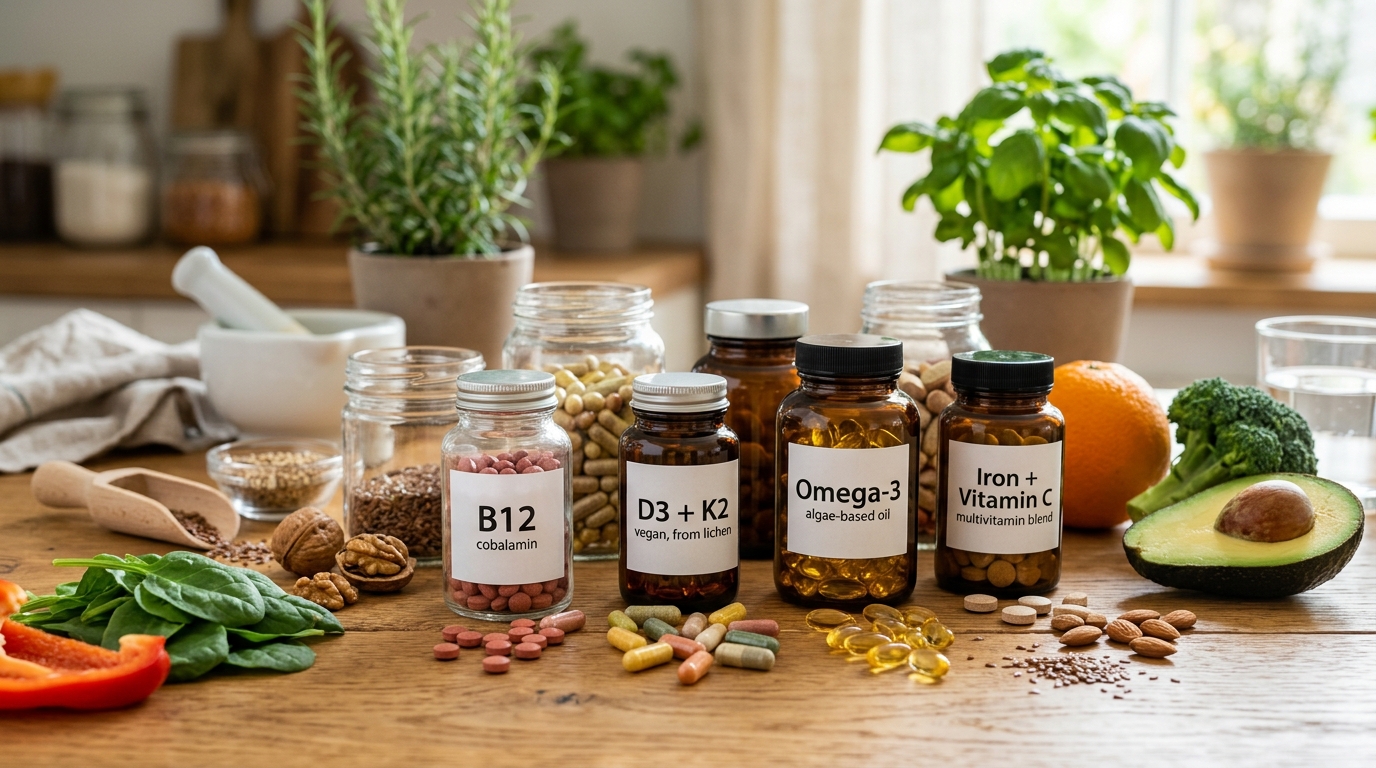
In practice, dietitians recommend 2.4 micrograms (mcg) daily for adults. You can get this through fortified foods like plant milks and nutritional yeast, but absorption varies. A sublingual or chewable B12 supplement is a reliable backup.
Look for cyanocobalamin or methylcobalamin forms. Cyanocobalamin is stable and well-absorbed. Methylcobalamin is often preferred by some, but research shows both work. A 2022 study in European Journal of Clinical Nutrition found no significant difference in absorption between the two forms in healthy adults.
Vitamin D: The Sunshine Vitamin (That You Still Might Need)
Vitamin D supports bone health and immune function. While sunlight is the best source, many people, especially those in northern latitudes or with darker skin, don’t get enough. Vegans are at higher risk because most D3 supplements are derived from lanolin (sheep wool).
Opt for vitamin D2 (ergocalciferol) from yeast or lichen-based D3. A 2020 study in Nutrients showed that lichen-derived D3 is as effective as lanolin-derived D3 at raising blood levels. Aim for 600-800 IU daily, or more if you’re deficient.
In practice, I suggest getting your levels tested annually. A simple blood test can tell you if you need a higher dose.
Omega-3 Fatty Acids: Plant-Based Sources and Supplements
Omega-3s, particularly EPA and DHA, are crucial for heart and brain health. Plant sources like flaxseeds and walnuts provide ALA, which the body converts to EPA and DHA at a low rate (around 5-10% for EPA and 2-5% for DHA).
Algae oil supplements are a direct, vegan source of EPA and DHA. A 2019 study in Lipids in Health and Disease found that algae oil supplementation increased omega-3 levels as effectively as fish oil. Take 500 mg of combined EPA and DHA daily.
If you’re vegetarian (not vegan), you might include eggs or dairy, but algae oil is still a smart choice for consistency.
Iron: Plant Sources and Absorption Tips
Iron from plant foods (non-heme) is less absorbed than heme iron from meat. Vegetarians and vegans need about 1.8 times more iron than omnivores, according to the NIH. Men need 8 mg daily, women 18 mg (premenopausal).
Foods like lentils, spinach, and tofu are good sources. Pair them with vitamin C (e.g., citrus, bell peppers) to boost absorption. Avoid tea or coffee with meals, as tannins inhibit iron uptake.
Supplements can help if you’re deficient. A 2021 study in American Journal of Clinical Nutrition found that ferrous bisglycinate (a chelated form) is better tolerated and absorbed than ferrous sulfate. Take 18-27 mg daily if needed, but only after a blood test.
Other Nutrients to Watch
Depending on your diet, you might also need calcium, zinc, iodine, and vitamin K2. Let’s break them down.
Calcium and Vitamin D: A Team Effort
Calcium is plentiful in fortified plant milks, tofu, and leafy greens. But oxalates in spinach reduce absorption. Aim for 1,000 mg daily from food and supplements if needed. Vitamin D helps calcium absorption, so keep that in check.
Zinc: Small but Mighty
Zinc supports immune function. Phytates in whole grains and legumes can inhibit absorption. Soaking beans and grains helps. A 2020 study in Nutrients suggested that vegans may need up to 50% more zinc than omnivores. Consider a supplement of 8-11 mg daily if your intake is low.
Iodine: The Thyroid Mineral
Iodine is critical for thyroid health. Vegans are at risk because dairy and seafood are main sources. Seaweed is a good source, but iodine content varies. A 2021 study in British Journal of Nutrition found that 100-150 mcg daily from a supplement is safe and effective.
How to Choose the Right Supplements
Not all supplements are created equal. Here’s what to look for.
- Third-party testing: Look for seals from USP, NSF, or ConsumerLab. These verify purity and potency.
- Vegan certification: Check for the Vegan Society trademark or similar.
- Form matters: For B12, cyanocobalamin; for iron, bisglycinate; for omega-3, algae oil.
- Avoid unnecessary additives: Skip fillers, artificial colors, and allergens.
In practice, I recommend a multivitamin designed for vegans as a safety net, plus individual supplements if you’re deficient.
Conclusion
Vegan and vegetarian diets can be incredibly healthy, but they require attention to certain nutrients. Focus on B12, vitamin D, omega-3s, and iron first. Then consider calcium, zinc, and iodine based on your food choices. Always test before you treat, and choose reputable brands. With a little planning, you can thrive on a plant-based diet without missing out on essential vitamins.
Q: Do vegans really need B12 supplements?
Yes, B12 is found almost exclusively in animal products. Studies show up to 80% of vegans may be deficient without supplementation. Fortified foods can help, but a daily supplement of 2.4 mcg is the most reliable way to meet your needs.
Q: What’s the best plant-based source of omega-3s?
Algae oil supplements are the most direct vegan source of EPA and DHA. They’re derived from algae, the same source fish get their omega-3s from. A dose of 500 mg combined EPA and DHA daily is recommended for optimal heart and brain health.
Q: Can I get enough iron from plant foods?
Yes, but plant iron (non-heme) is less absorbed. Pair iron-rich foods like lentils and spinach with vitamin C to boost absorption. If you’re deficient, a chelated iron supplement like ferrous bisglycinate is gentler on the stomach and well-absorbed.
Q: Are vegan vitamin D supplements effective?
Lichen-derived vitamin D3 is vegan and effective. Research shows it raises blood levels as well as lanolin-derived D3. Aim for 600-800 IU daily, or more if you’re deficient. Get your levels tested to be sure.
Q: Do I need a multivitamin if I’m vegan?
A vegan multivitamin can be a good safety net, but it’s not a substitute for a balanced diet. Focus on whole foods first, then fill gaps with targeted supplements like B12, D, and omega-3s. Always choose third-party tested brands.
Article Was Generated By AI.