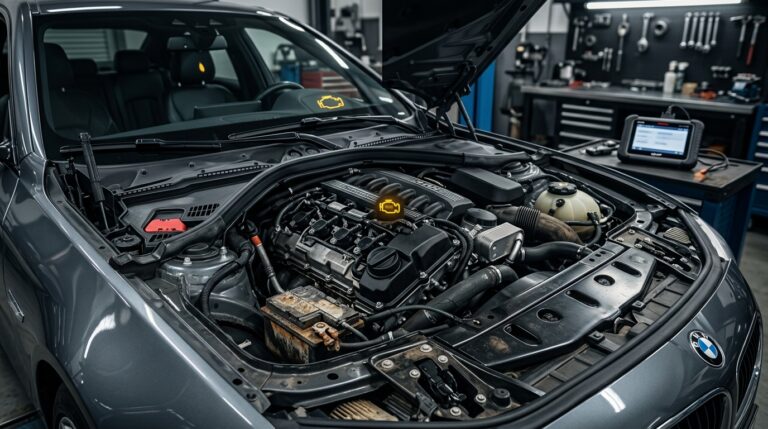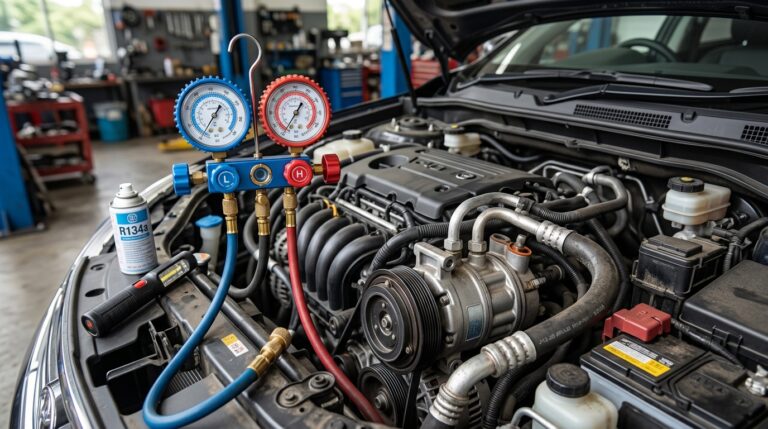
Your check engine light just came on and your stomach drops a little. That’s normal. The light is one of the most misunderstood warnings on your dashboard, and it covers everything from a loose gas cap to a failing catalytic converter. The good news is that a steady light rarely means pull over immediately. Here’s how to figure out what’s happening and what to do next.
First, Check Whether the Light Is Steady or Flashing
This is the single most important thing to notice in the first few seconds. A steady check engine light means the computer has logged a fault, but the car is still safe to drive for now. A flashing light is a different story entirely.
A flashing check engine light usually signals a misfire that’s dumping unburned fuel into your exhaust. That fuel can overheat and destroy your catalytic converter, a repair that often runs $1,000 to $2,500 or more. According to the EPA, a misfiring engine can also push raw hydrocarbons into the air at many times the legal limit.
If the light is flashing, slow down and pull over safely. Driving even a few miles with a hard misfire can turn a $200 spark plug job into a $2,000 exhaust repair.
Look for Other Symptoms Before You Panic
The check engine light never travels alone. Pay attention to how the car feels, sounds, and smells. These clues narrow down the cause fast.
Warning signs that mean stop driving
- Rough idle or violent shaking, which often points to a misfire or vacuum leak
- Loss of power when you press the accelerator
- Smoke from the exhaust, especially blue or white smoke
- A burning or rotten egg smell, which can indicate a converter or fuel problem
- The temperature gauge climbing into the red
- Any accompanying oil pressure or battery light
If you notice any of these, park the car and arrange a tow. AAA reports that battery and engine-related breakdowns make up a large share of its roadside calls, and driving on a known fault is how small problems become expensive ones.
Symptoms you can probably drive with
A steady light with no drivability changes is usually fine for a short trip to a shop or auto parts store. In practice, many of these are minor: a loose fuel cap, a small EVAP leak, or a sensor that’s drifting out of range.
Even so, don’t ignore it for weeks. A $30 oxygen sensor left alone can eventually foul the catalytic converter, and that’s when the bill multiplies.
Try the Simple Checks First
Before you assume the worst, rule out the cheap stuff. Mechanics see these constantly, and they cost nothing to check.
Tighten the gas cap
A loose or damaged fuel cap is one of the most common triggers for a check engine light. It sets an EVAP system code because fuel vapor escapes. Twist the cap until it clicks, then drive a few short trips. The light often clears itself after a handful of drive cycles.
If the cap’s rubber seal looks cracked or the cap won’t click, replace it. A new cap costs under $20 at most parts stores.
Check your fluids and recent work
Low oil, low coolant, or a dipstick that wasn’t seated after an oil change can all trip a warning. If you just had service done, check that the oil cap and dipstick are fully seated. It sounds trivial, but it happens more than you’d think.
Read the Code With an OBD-II Scanner
Every car sold in the US since 1996 has an OBD-II port, usually under the dash near the steering column. A basic Bluetooth scanner costs $20 to $40 and pairs with a free app on your phone. That little tool tells you the exact code the computer stored.
Codes starting with P0 are generic powertrain codes, and they mean the same thing across brands. P0300, for example, means a random or multiple-cylinder misfire. P0420 points to catalytic converter efficiency below threshold. P0171 signals a lean fuel condition.
Don’t treat the code as a diagnosis. It tells you which system is out of range, not which part to replace. A P0171 could be a vacuum leak, a dirty mass airflow sensor, or a weak fuel pump. In practice, good technicians use the code as a starting point and then test the actual components.
Clearing the code won’t fix anything
You can erase the code with a scanner, and the light will go out. But if the underlying fault is still there, it’ll come back, sometimes within a single drive cycle. Clearing codes also wipes freeze-frame data that a mechanic could use to see exactly what the engine was doing when the fault set.
Decide How Urgent the Repair Is
Not every code needs immediate attention. Here’s a rough way to sort them.
- Drive now, fix soon: EVAP leaks, small sensor faults, and most emissions codes. These affect fuel economy or emissions but won’t strand you.
- Fix within days: Oxygen sensor faults, thermostat codes, and anything causing a noticeable drop in fuel economy.
- Fix before driving further: Misfires (P0300 series), transmission codes, and anything paired with a flashing light.
One more thing: if you live in a state with emissions testing, a check engine light is an automatic fail. California, New York, and about 30 other states require the light to be off and the monitors to be ready before you can pass. That alone is often enough reason to get it handled.
When to See a Mechanic
If the code points to something you can’t test yourself, or the light returns after a reset, book a diagnostic appointment. Expect to pay $100 to $150 for a diagnostic fee at most independent shops, and many apply it toward the repair if you proceed.
Ask for the specific code and the test results, not just a description. A shop that says “it needs a sensor” without showing you live data or a voltage test is guessing. Good technicians confirm the fault before they replace parts.
You can also check whether your issue falls under a manufacturer recall or extended warranty. Some common failures, like certain fuel pump or catalytic converter issues, have been covered by campaigns from automakers and reported through NHTSA. Look up your VIN on the NHTSA site before paying out of pocket.
Conclusion
A steady check engine light gives you time to think. A flashing one doesn’t. Check for other symptoms, tighten the gas cap, read the code with a cheap scanner, and let the results guide your next move. Most of the time, you’re looking at a minor fix, not a new engine.
Q: Can I keep driving with the check engine light on?
If the light is steady and the car drives normally, you can usually drive short distances to a shop or parts store. Avoid long trips and highway speeds until you know the cause. If the light is flashing, the engine is misfiring and you should pull over and stop driving to prevent catalytic converter damage.
Q: What does a flashing check engine light mean?
A flashing light almost always means an active misfire, where unburned fuel is entering the exhaust. That fuel can overheat and destroy the catalytic converter, a repair that often costs over $1,000. Slow down, pull over safely, and have the car towed or inspected before driving further.
Q: Will the check engine light reset itself after fixing the gas cap?
Often, yes. After you tighten or replace the cap, the computer needs several drive cycles to re-run its EVAP test. That can take a few days of normal driving. If the light stays on after a week, or returns right away, the cause is something else and you should read the code.
Q: How much does a diagnostic scan cost?
Many auto parts stores read codes for free, and a basic Bluetooth OBD-II scanner costs $20 to $40. A professional diagnostic at an independent shop typically runs $100 to $150, and many shops credit that fee toward the repair if you approve the work. Dealer diagnostic fees tend to run higher.
Q: Does a check engine light fail an emissions test?
Yes. In states with emissions testing, an illuminated check engine light is an automatic failure, even if the car runs fine. The repair must be made and the light cleared, then the vehicle needs enough drive time for the readiness monitors to reset before it can pass a retest.
Article Was Generated By AI.