Electric vehicles (EVs) often come with a higher sticker price, but they can save you money over time. The real answer depends on how long you own the car, where you charge it, and what you pay for insurance. We crunched the numbers to show you which powertrain costs less over 5, 10, and 15 years.
Purchase Price: The Gap Is Closing
In 2025, the average new EV costs about $55,000, while the average gas car is around $48,000, according to Kelley Blue Book. That $7,000 gap is narrower than it was three years ago, when EVs carried a $15,000 premium.
Federal tax credits can flip the math. The Clean Vehicle Credit gives up to $7,500 for qualified EVs, and some states add another $2,000 to $5,000. If you qualify, an EV can be cheaper to buy than a comparable gas model.
But credits have income caps and MSRP limits. Many popular EVs now exceed the $55,000 sedan cap or $80,000 SUV cap, so they don’t qualify. Always check the latest rules before assuming you’ll get the credit.
Fuel Costs: The Biggest Long-Term Difference
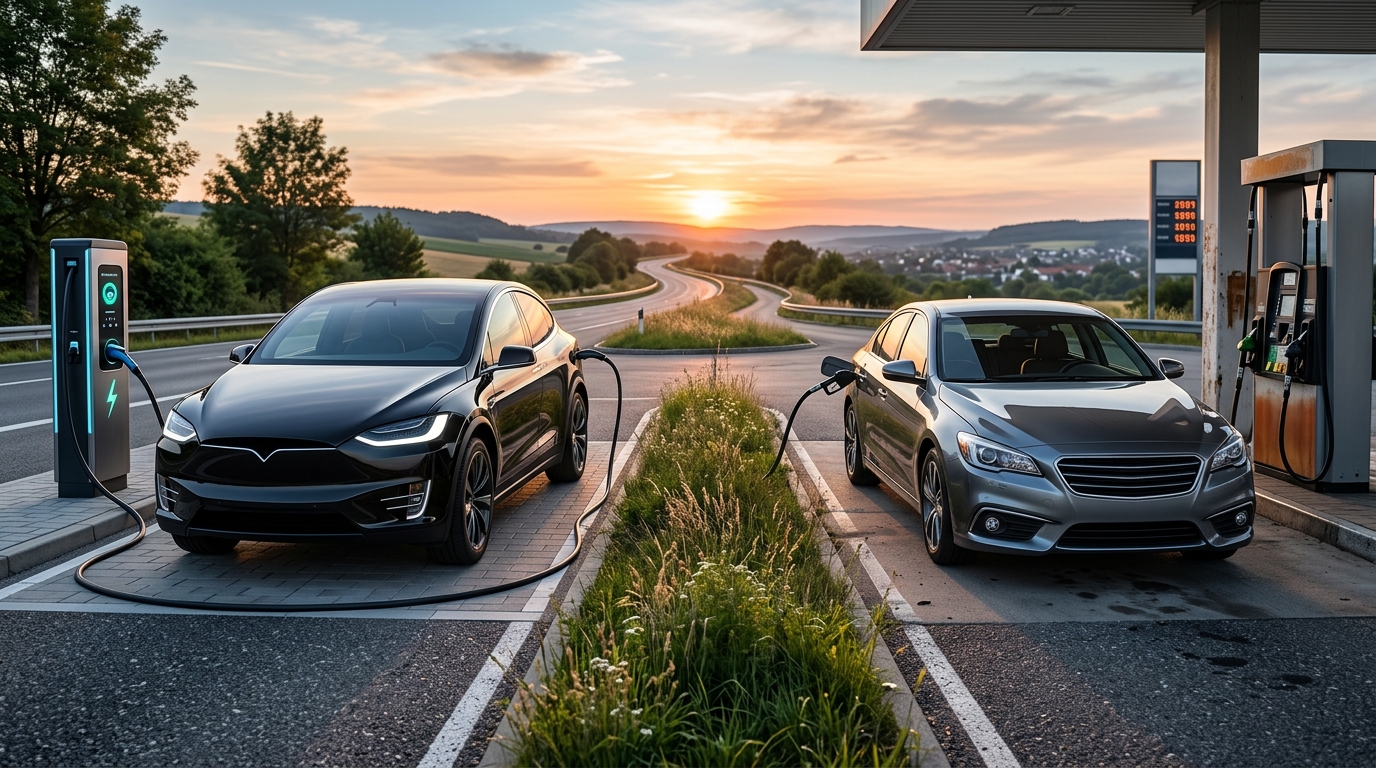
This is where EVs pull ahead. The U.S. Department of Energy estimates that driving an EV costs about $0.04 per mile on average, compared to $0.12 per mile for a gas car at $3.50 per gallon. Over 15,000 miles a year, that’s $600 for electricity versus $1,800 for gas.
Over 10 years, you’d save roughly $12,000 on fuel alone. That’s enough to offset a big chunk of the purchase price gap.
Home Charging vs Public Charging
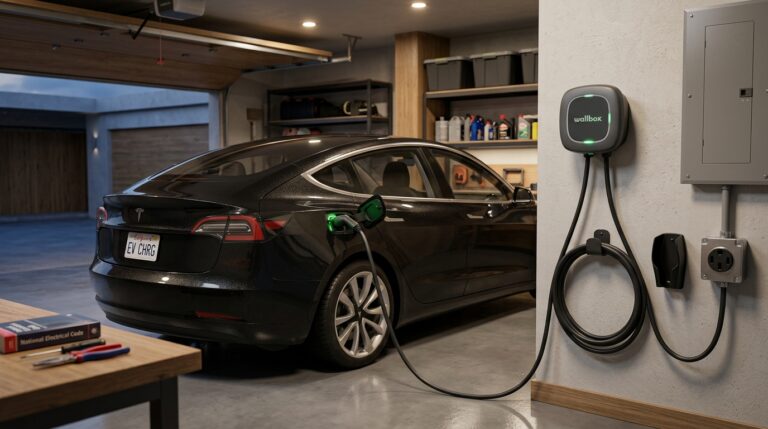
Your savings depend heavily on where you charge. Home charging at off-peak rates (around $0.12 per kWh) is the cheapest. Public DC fast chargers can cost $0.40 to $0.60 per kWh, which narrows the gap to about $0.08 per mile.
If you can’t charge at home, your fuel savings shrink significantly. In practice, renters who rely on public charging may see little to no fuel cost advantage.
Maintenance and Repairs: EVs Have Fewer Moving Parts
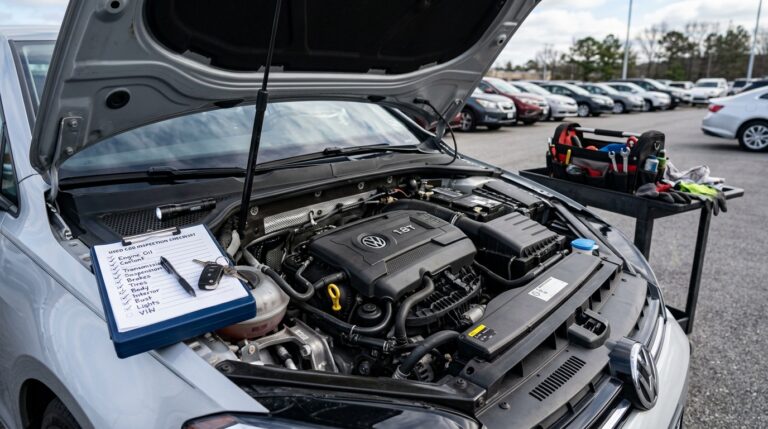
EVs don’t need oil changes, spark plugs, timing belts, or transmission fluid. Consumer Reports found that EV owners spend about half as much on maintenance over the life of the car compared to gas car owners.
Regenerative braking also extends brake pad life, often to 100,000 miles or more. That’s a $300 to $500 saving per brake job.
However, EV repairs can be pricey when they do happen. A replacement battery pack can cost $5,000 to $20,000, though most modern batteries are warrantied for 8 years or 100,000 miles.
Tire costs are higher for EVs because they’re heavier and wear tires faster. Expect to replace tires every 30,000 to 40,000 miles instead of 50,000.
Insurance, Taxes, and Fees
Insuring an EV typically costs 10% to 25% more than a comparable gas car, according to insurance comparison site The Zebra. That’s because EVs are more expensive to repair and parts can take longer to source.
Some states charge extra registration fees for EVs to make up for lost gas tax revenue. In states like California and Texas, that’s an extra $100 to $200 per year.
On the flip side, some states offer HOV lane access, reduced tolls, or utility rebates for home charger installation. These perks can be worth $500 to $1,000 annually in dense urban areas.
Depreciation and Resale Value
EVs have historically depreciated faster than gas cars, partly due to rapid technology improvements and battery health concerns. A 2019 study by iSeeCars found that EVs lost 52% of their value in 5 years, versus 39% for gas cars.
That trend is shifting. Teslas and some newer models now hold value better, and rising gas prices make used EVs more attractive. Still, if you plan to sell after 3 years, a gas car often loses less value.
Leasing can be a smart way to avoid depreciation risk on an EV, especially if you’re not sure about long-term battery life.
The 5, 10, and 15-Year Cost Breakdown
Let’s compare a $48,000 gas car and a $55,000 EV, both driven 15,000 miles a year. We’ll assume the EV qualifies for a $7,500 tax credit, bringing its effective price to $47,500.
- 5 years: Gas car total cost (purchase + fuel + maintenance + insurance) = $68,000. EV total = $59,000. EV wins by $9,000.
- 10 years: Gas car = $92,000. EV = $73,000. EV wins by $19,000.
- 15 years: Gas car = $116,000. EV = $87,000. EV wins by $29,000.
These numbers assume home charging at average rates, no major repairs, and the tax credit. Without the credit, the EV still wins, but by about $7,000 less over 15 years.
If you can’t charge at home, the gap shrinks to roughly $10,000 over 15 years, and a gas car might be cheaper if you drive fewer than 10,000 miles a year.
When a Gas Car Still Makes Sense
EVs aren’t for everyone. If you live in an apartment without charging access, drive long distances in rural areas, or need a heavy-duty truck for towing, a gas car may be more practical and cheaper.
Also, if you keep cars for only 2 to 3 years, the higher upfront cost and faster depreciation of an EV can wipe out fuel savings.
In practice, the sweet spot for EV savings is 6 to 10 years of ownership, with home charging and moderate annual mileage.
Conclusion
Over the long haul, electric vehicles usually cost less than gas cars, mainly because of fuel and maintenance savings. A typical EV saves $12,000 to $15,000 on fuel over 10 years and about half on maintenance. The purchase price gap is closing, and tax credits can erase it entirely. But if you can’t charge at home or you trade cars every few years, a gas car might still be the cheaper choice. Run your own numbers with your local electricity and gas rates before you decide.
Q: Do EVs really save money over gas cars?
Yes, for most drivers who keep their car 6+ years and charge at home. Fuel and maintenance savings typically total $12,000 to $15,000 over 10 years. However, if you can’t charge at home or drive fewer than 10,000 miles a year, a gas car can be cheaper.
Q: How much does it cost to charge an EV compared to gas?
Home charging costs about $0.04 per mile, while gas costs around $0.12 per mile at $3.50 per gallon. Public fast charging is more expensive at $0.08 to $0.10 per mile. Over 15,000 miles, that’s $600 for home charging versus $1,800 for gas.
Q: Are EV repairs more expensive?
Routine maintenance is cheaper because EVs have fewer moving parts and no oil changes. But major repairs like battery replacement can cost $5,000 to $20,000. Most batteries are warrantied for 8 years or 100,000 miles, so you’re covered for the early years.
Q: Do EVs depreciate faster than gas cars?
Historically, yes. A 2019 iSeeCars study found EVs lost 52% of value in 5 years versus 39% for gas cars. But newer models, especially Teslas, are holding value better. Leasing can help you avoid depreciation risk if you’re unsure about long-term battery life.
Q: What about insurance and taxes for EVs?
EV insurance typically costs 10% to 25% more due to higher repair costs. Some states charge an extra $100 to $200 annual registration fee to offset lost gas taxes. But you may qualify for HOV lane access, toll discounts, or home charger rebates worth $500 to $1,000 per year.
Article Was Generated By AI.