A dying battery rarely fails without warning. Most cars give you clues for days or even weeks before the engine refuses to crank.
The trick is knowing which signs matter and which are just quirks of an older car. This guide walks through the most reliable symptoms, explains what causes them, and tells you when to replace the battery before it leaves you stranded.
Slow Cranking: The Most Common Early Sign
When you turn the key or press the start button, the engine should spin briskly and catch within a second or two. If it cranks slowly—like it’s struggling to turn over—the battery is likely low on charge or nearing the end of its life.
Cold weather makes this worse, but a healthy battery should still crank with authority on a chilly morning.
Pay attention to consistency. A single slow start after a cold night might just be a weak charge from short trips. Repeated slow cranking over several days points to a battery that can no longer hold enough power. Don’t wait for a no-start; get the battery tested at that point.
Electrical Oddities You Shouldn’t Ignore
Modern cars are rolling computers, and they’re sensitive to voltage drops. A battery on its way out can cause a range of electrical gremlins that seem unrelated to starting. Here are some common ones:
- Dim headlights at idle: Lights that brighten when you rev the engine suggest the battery isn’t holding a steady charge.
- Slow power windows or seats: Motors that move sluggishly, especially when the engine is off, draw more current than a weak battery can supply.
- Flickering dashboard lights: Interior lights or instrument cluster illumination that pulses or dims randomly can indicate unstable voltage.
- Radio or infotainment resets: If your presets vanish or the clock resets, the battery may be dropping voltage during startup.
These symptoms can also come from a failing alternator or loose connections, so they’re not proof of a bad battery. But combined with slow cranking, they strengthen the case for testing.
The Battery Warning Light and Other Dashboard Clues
Most cars have a dedicated battery light—usually a rectangle with a plus and minus sign. When it stays on after the engine starts, the charging system isn’t working properly. That could mean a bad alternator, a broken belt, or corroded cables. The battery itself might be fine but unable to stay charged.
Some vehicles also show a message like “Service Battery Charging System” or “Battery Saver Active.” These are not generic reminders; they indicate the car’s computer has detected a voltage issue. Treat them as a prompt to check the battery and charging system promptly.
Physical Signs Under the Hood
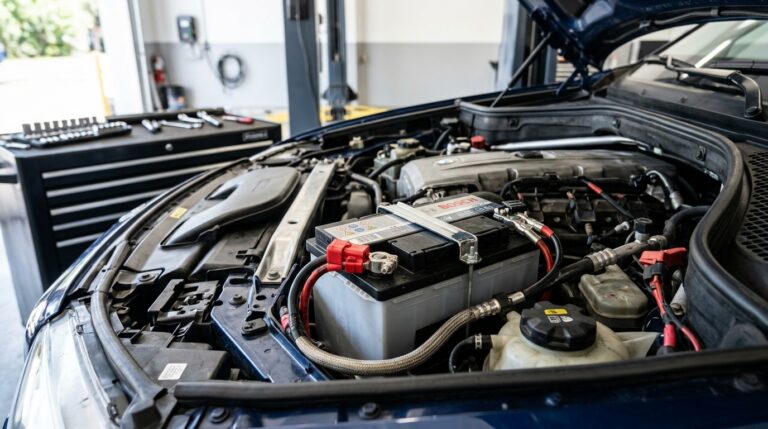
A visual inspection can reveal a lot. Open the hood and look at the battery. A healthy battery looks clean and dry. Problems show up as:
Swollen or Bloated Case
If the battery’s sides bulge outward, it has likely suffered internal damage from heat or overcharging. A swollen battery can fail without warning and should be replaced immediately—it may even be a safety risk.
Corrosion on Terminals
White, crusty buildup around the posts is common and can prevent proper charging. Cleaning it may restore function, but heavy corrosion often signals a battery that’s been venting excessively, which happens as batteries age.
Foul Odor
A rotten-egg smell near the battery means it’s leaking hydrogen gas from a cracked case or overcharging. Stop driving and have it checked—this is a fire hazard.
Age and Usage: The Silent Factors
Car batteries typically last three to five years, depending on climate and driving habits. If yours is approaching that range, start planning for a replacement even if it seems fine. Heat is harder on batteries than cold; in hot climates, expect the shorter end of that range.
Your driving pattern matters too. Frequent short trips don’t give the alternator enough time to fully recharge the battery after starting. Over months, that deficit adds up. If you mostly run errands within a few miles, consider a periodic long drive or a battery maintainer to keep it topped up.
How to Confirm Your Suspicions
You don’t need to guess. A simple multimeter test can tell you a lot. With the engine off, a healthy battery should read about 12.6 volts.
Anything below 12.4 volts suggests it’s partially discharged; below 12 volts, it’s significantly drained. With the engine running, you should see 13.5 to 14.5 volts at the battery—if not, the alternator may be the problem.
For a more definitive answer, most auto parts stores will test your battery and charging system for free. They use a load tester that simulates the demand of starting, which reveals whether the battery can deliver enough current under stress. That test is far more reliable than a voltage reading alone.
When to Replace vs. When to Charge
A battery that’s simply discharged—from leaving lights on, for example—can often be recharged and continue working for years. But a battery that’s old, swollen, or repeatedly goes flat after charging is telling you it’s done. Jump-starting gets you moving, but it doesn’t fix the underlying issue.
If you’re unsure, err on the side of replacement. A new battery costs far less than a tow truck and a missed appointment. And if you’ve noticed multiple signs from this list, the odds are high that the battery is on its last legs.
Frequently Asked Questions
Can a car battery die suddenly without warning?
It’s rare but possible. A battery can fail internally without showing obvious symptoms, especially if a cell shorts out. However, most batteries give at least some warning—slow cranking or electrical quirks—in the days before failure.
How long can I drive with a dying battery?
If the alternator is working, the car will run on alternator power even with a weak battery. But once you shut it off, it may not restart. It’s best to replace the battery as soon as you confirm it’s failing.
Does cold weather kill batteries?
Cold reduces a battery’s available power and makes the engine harder to turn over, so a marginal battery often fails in winter. But heat is actually the bigger long-term enemy because it accelerates internal corrosion.
Bottom Line
Your car battery rarely quits without a hint. Slow cranking, dim lights, dashboard warnings, and physical changes under the hood are all signals worth heeding.
If your battery is more than three years old and showing any of these signs, get it tested. A few minutes of attention now can save you a stressful breakdown later.
Article Was Generated By AI.