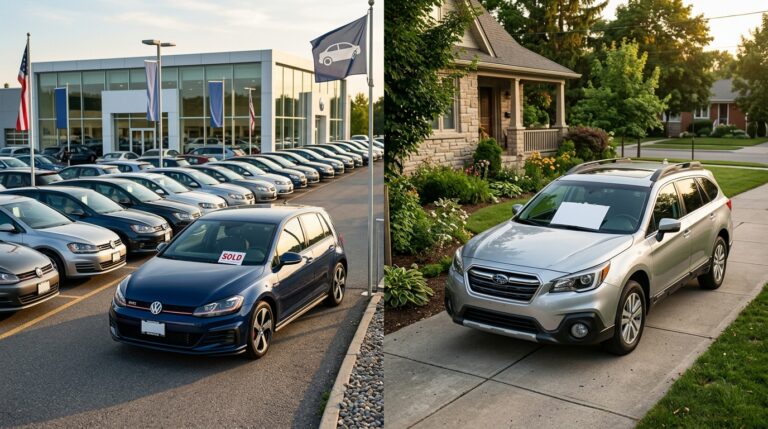
A good deal on a used car isn’t the lowest price on the lot. It’s the lowest price for a car in known condition. A 2019 Honda Civic priced $2,000 under market is a steal if the history is clean. The same discount on a car with a rebuilt title is a trap. The difference comes down to how well you read the numbers before you commit.
Edmunds and Kelley Blue Book both publish regional pricing, and those tools give you a baseline in minutes. What they don’t do is tell you whether the specific car in front of you deserves that price. That’s your job. Here’s how to do it like someone who’s bought and sold a few.
Start With the Real Market Price, Not the Sticker
Dealers price cars to leave room for negotiation. Private sellers often price on emotion. Neither number tells you what the car is worth. You need a third-party valuation from at least two sources before you talk money.
Kelley Blue Book’s private party value and Edmunds’ appraisal tool usually land within a few hundred dollars of each other. If they disagree by more than $1,000, dig into why. Trim level, mileage, and local demand all move the number.
Check listings for similar cars within 50 miles. If ten 2020 Toyota RAV4s with 40,000 miles are listed between $24,000 and $26,500, that’s your band. A car listed at $22,900 is either a genuine deal or hiding something.
Factor In the Costs Nobody Advertises
A $19,500 sticker becomes $21,800 fast once you add tax, title, registration, and dealer fees. In states like Florida, dealer fees alone can hit $999. Ask for the out-the-door price in writing before you negotiate anything else.
Private sales skip most fees but rarely include a warranty. Budget $500 to $1,000 for an independent pre-purchase inspection and any immediate repairs. A car that needs $1,200 in tires and brakes isn’t a deal at any price until you subtract that from the offer.
Read the Vehicle History Report Like a Skeptic
A clean CARFAX doesn’t mean a clean car. It means nothing bad was reported. Roughly one in five cars has some history gap, according to reporting from Carfax competitor AutoCheck, and independent shops often don’t report at all.
Look for title brands first. Salvage, rebuilt, flood, and lemon titles cut resale value by 20% to 50% and can void insurance coverage. Walk away from anything with a branded title unless you’re a mechanic buying a project.
Then check the timeline. A car with 60,000 miles and only two service records probably wasn’t maintained at a dealership. That’s not fatal, but it means the inspection matters more.
Spot the Red Flags in the Data
- Odometer readings that jump backward or stall for years
- Registration gaps longer than six months
- Multiple owners in under 30,000 miles
- Accident records with airbag deployment
- Title transfers across state lines in rapid succession
Any one of these deserves a question. Two or more and you should assume the worst until proven otherwise.
Inspect the Car Before You Fall in Love
Emotion costs money. Buyers who test drive first and inspect second pay more, because they’ve already decided. Flip the order. Look at the car in daylight, on dry pavement, before you sit in the driver’s seat.
Check panel gaps around the doors and hood. Uneven gaps suggest collision repair. Run a magnet wrapped in cloth along the fenders and quarter panels. It sticks to steel but not to body filler, so a weak grip means Bondo.
Look at the tires. Four matching tires with even wear suggest a careful owner. Mismatched brands or uneven inner-edge wear point to skipped rotations or suspension problems. A set of four tires runs $600 to $1,200, so factor that in.
Pay for a Pre-Purchase Inspection
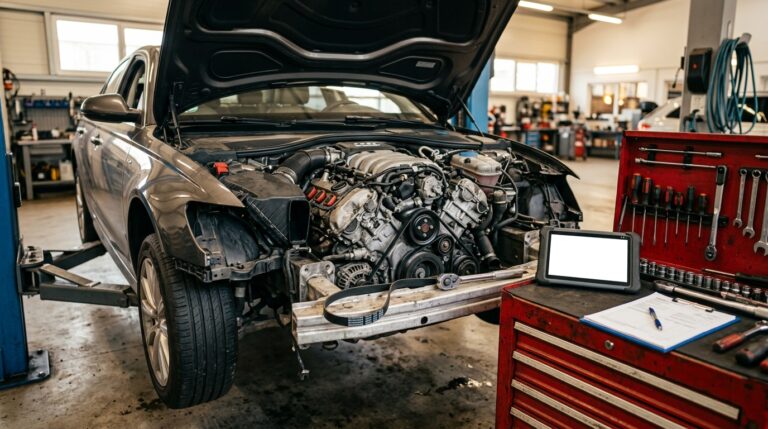
AAA and most independent shops offer pre-purchase inspections for $100 to $200. That’s the cheapest insurance you’ll ever buy. A mechanic on a lift sees things you can’t, from frame rust to leaking seals to a transmission that’s about to fail.
In practice, about one in four inspections I’ve seen flagged something the seller didn’t disclose. Use the findings as leverage. A $400 repair estimate is a legitimate reason to knock $600 off the price.
Match the Price to Mileage and Condition
Mileage matters less than maintenance, but it still sets the baseline. The old 12,000-miles-per-year rule still holds for most cars. A 2018 model with 90,000 miles is average. The same car with 45,000 miles commands a premium of roughly $2,000 to $3,500.
Condition tiers move the number too. KBB rates cars from fair to excellent, and the spread between those tiers can reach 15%. A car with a torn driver’s seat, curbed wheels, and a cracked windshield sits in fair territory, no matter what the seller claims.
Compare the asking price to the fair-condition value, not the excellent one. That’s the honest number. If the seller wants excellent-condition money, the car needs to earn it.
Know Which Models Hold Value
Toyota Camry, Honda Accord, and Mazda3 consistently rank near the top for resale value in Consumer Reports reliability data. That means fewer bargains but lower risk. Luxury brands like BMW and Land Rover depreciate faster, which creates deals on paper but higher repair bills.
Run a quick search for the model’s average annual maintenance cost. A used BMW 3 Series can run $1,200 a year in upkeep versus $400 for a Camry. A $3,000 discount disappears in three years.
Negotiate With Numbers, Not Feelings
Bring three comparable listings to the table. Sellers respond to evidence, not opinions. Say, “Three similar cars within 40 miles are listed at $21,500, and this one needs $500 in tires,” and you’ve made an argument, not an offer.
Anchor low but stay reasonable. Offering 10% below asking is standard in private sales. Dealers have less room, typically 3% to 6% on used inventory. A $20,000 car at a dealership might move $800 to $1,200.
Be ready to walk. The best negotiators are the ones who genuinely don’t need the car. There’s always another listing, and sellers know it.
Conclusion
A good deal is a car priced below market in verified condition. Check two pricing sources, pull the history report, pay for an inspection, and negotiate with comparable listings in hand. Do those four things and you’ll spot the real bargains and sidestep the expensive mistakes.
Q: How far below market price should a good deal be?
Most fair deals land 5% to 10% below the fair-condition book value. Anything 20% or more below market usually signals a hidden problem like a branded title, accident history, or mechanical issue. Use that gap as a reason to inspect harder, not to buy faster.
Q: Is a pre-purchase inspection really worth the money?
Yes. A $100 to $200 inspection routinely catches issues that cost $1,000 or more to fix, from frame damage to failing transmissions. It also gives you negotiating leverage. Sellers are far more willing to drop the price when you show them a written repair estimate from a certified mechanic.
Q: Should I buy from a dealer or a private seller?
Private sellers usually offer lower prices and skip dealer fees, but you get no warranty and less accountability. Dealers charge more but often include limited warranties and have reputations to protect. Neither is automatically better. Compare out-the-door prices and factor in the value of any warranty before deciding.
Q: Does high mileage always mean a bad deal?
No. Maintenance matters more than mileage. A 150,000-mile car with a full service history and new timing belt can outlast a 90,000-mile car with skipped oil changes. Check the records, get an inspection, and price the car based on condition rather than the odometer alone.
Q: What’s the fastest way to check if a used car price is fair?
Pull the Kelley Blue Book private party value and Edmunds appraisal for the exact year, trim, and mileage. Then compare at least three local listings within 50 miles. If the asking price sits within that range and the car passes inspection, the price is fair. If it’s well below, investigate why.
Article Was Generated By AI.