Losing weight doesn’t require a radical diet or a gym membership you’ll never use. It comes down to eating in a way you can actually stick with for months, not days. This guide breaks down what healthy eating for weight loss really looks like, minus the gimmicks.
You’ll learn how many calories you need, why protein matters more than you think, and how to build meals without weighing every gram of food. Everything here is based on established nutrition science, not influencer claims.
Start With a Calorie Deficit, Not a Crash Diet
Weight loss happens when you eat fewer calories than your body burns. That’s the whole equation. The National Institutes of Health puts it plainly: a deficit of roughly 500 calories per day produces about one pound of loss per week.
But cutting too hard backfires. Research from the journal Obesity shows severe restriction slows your metabolism and increases muscle loss. Aim for 300 to 500 calories below your maintenance level instead.
How to Estimate Your Maintenance Calories
Multiply your body weight in pounds by 14 to 16 if you’re moderately active. A 180-pound person lands around 2,520 to 2,880 calories. Subtract 400, and you’ve got a realistic daily target.
This isn’t exact. Track your weight for two weeks and adjust. If you’re losing 0.5 to 1 percent of body weight weekly, you’re on track.
Prioritize Protein at Every Meal
Protein keeps you full and protects muscle while you lose fat. A 2015 study in the American Journal of Clinical Nutrition found higher protein intake preserved lean mass during weight loss and reduced hunger hormones like ghrelin.
Most people need 0.7 to 1 gram of protein per pound of body weight when cutting. For a 180-pound person, that’s 126 to 180 grams daily. It sounds like a lot, but it’s manageable once you know where to get it.
- Chicken breast: 31 grams per 100 grams cooked
- Greek yogurt: 10 grams per 100 grams
- Eggs: 6 grams each
- Lentils: 9 grams per 100 grams cooked
- Tofu: 8 grams per 100 grams
- Cottage cheese: 11 grams per 100 grams
In practice, building each meal around one of these foods makes hitting your target far easier. A breakfast of three eggs and Greek yogurt alone gets you close to 40 grams.
Build Plates Around Whole Foods
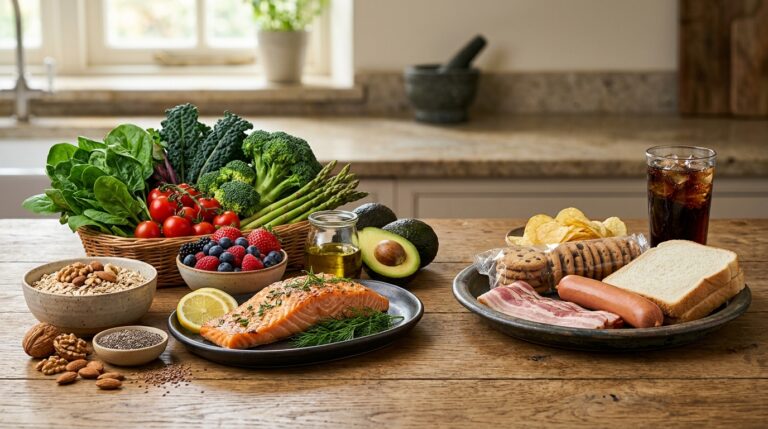
Whole foods fill you up with fewer calories because they contain water, fiber, and protein. A 2019 trial at the National Institutes of Health found people ate 500 fewer calories per day on an unprocessed diet compared to a processed one, without trying.
That’s the quiet advantage. You don’t need to count every bite when most of your plate comes from foods that fight hunger naturally. Ultra-processed items like chips, sugary cereals, and frozen dinners do the opposite.
The Simple Plate Formula
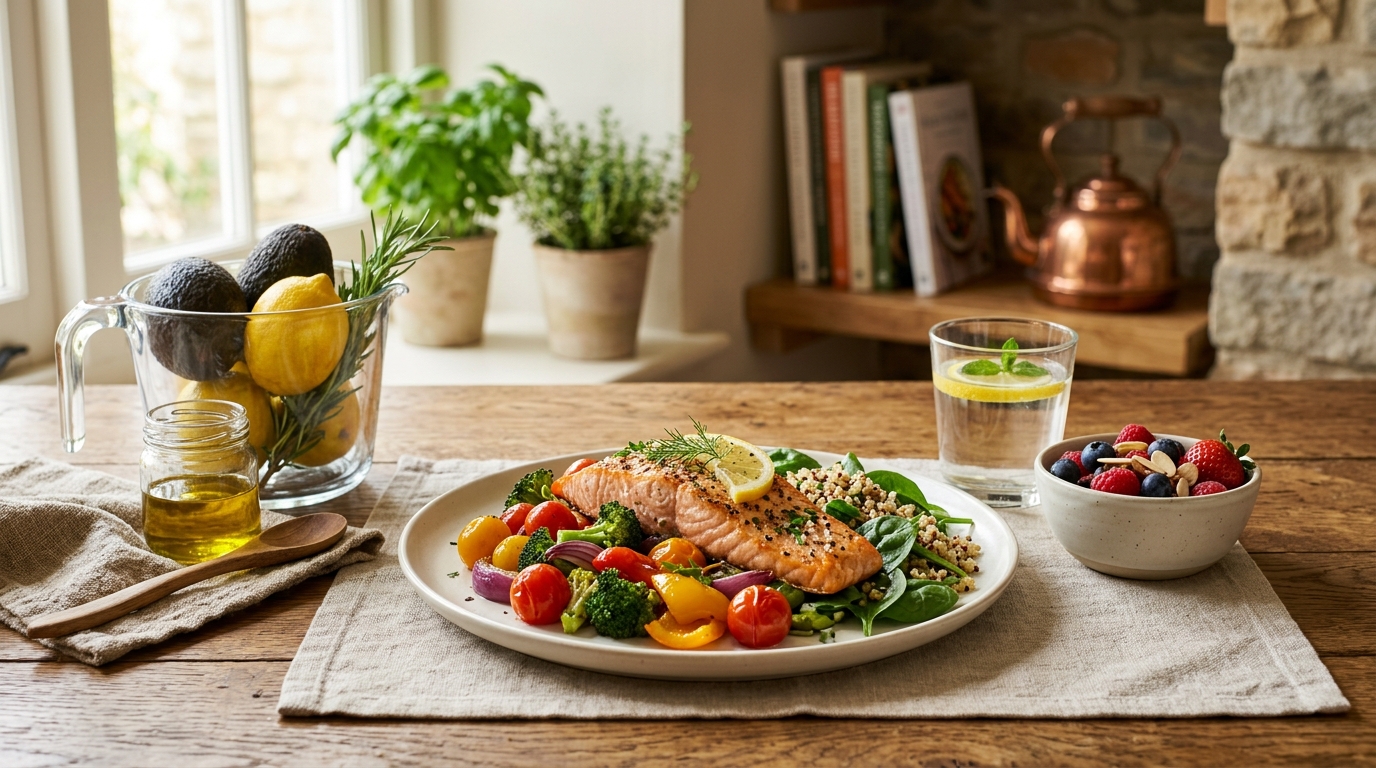
Fill half your plate with vegetables or fruit. Add a palm-sized portion of protein. Finish with a fist-sized serving of starch like rice, potatoes, or oats, plus a thumb of fat such as olive oil or avocado.
This approach, used by registered dietitians at Harvard’s Healthy Eating Plate, removes the guesswork. You get fiber, protein, and carbs in a ratio that keeps blood sugar steady and hunger low.
Don’t Fear Carbs, Choose Them Wisely
Carbs aren’t the enemy. Refined carbs are the problem. White bread, soda, and candy spike blood sugar and leave you hungry an hour later.
Swap them for oats, brown rice, quinoa, beans, and whole fruit. These digest slower and deliver fiber. A 2020 meta-analysis in The BMJ linked higher whole grain intake to less belly fat over time.
You don’t have to go low-carb. You just have to pick carbs that earn their calories.
Watch Liquid Calories
A 20-ounce soda packs 240 calories. A large caramel latte can hit 400. These drinks barely register as food in your brain, so you eat the same amount afterward.
Cutting two sugary drinks a day saves roughly 3,360 calories weekly. That’s nearly a pound of fat, gone without changing a single meal.
Plan Meals to Beat Decision Fatigue
Willpower fades. Systems don’t. People who plan meals lose more weight and keep it off, according to research from the American Journal of Preventive Medicine.
Spend 20 minutes each Sunday sketching five dinners. Buy the ingredients. You’ll avoid the 6 p.m. scramble that ends in takeout.
A Beginner-Friendly Weekly Framework
- Monday: Grilled chicken, roasted vegetables, quinoa
- Tuesday: Lentil soup with a side salad
- Wednesday: Baked salmon, sweet potato, broccoli
- Thursday: Turkey chili with beans
- Friday: Stir-fry with tofu, peppers, and brown rice
Repeat breakfasts and lunches. Variety matters for nutrition, but decision fatigue kills diets. Eating the same two or three breakfasts keeps you consistent without boredom.
Handle Hunger and Cravings Without Guilt
Hunger is information, not failure. If you’re constantly starving, your deficit is too aggressive or your meals lack protein and fiber.
Drink water first. Thirst masquerades as hunger more often than people realize. A 2016 study in Frontiers in Nutrition found drinking 500ml of water before meals reduced calorie intake and supported weight loss.
For cravings, use the 10-minute rule. Wait ten minutes and distract yourself. Most urges pass. If it doesn’t, eat a measured portion and move on. One cookie doesn’t derail a week.
Sleep and Stress Matter More Than You Think
Sleeping under six hours raises ghrelin, the hunger hormone, and lowers leptin, which signals fullness. A 2019 review in Sleep Medicine Reviews tied short sleep to higher obesity risk.
Aim for seven to nine hours. Keep stress in check with walks, breathing exercises, or whatever calms you. Cortisol drives cravings for sugary, fatty foods.
Track Progress Without Obsessing
Weigh yourself once or twice a week, same time, same conditions. Daily fluctuations from salt, water, and hormones are normal and meaningless.
Take waist measurements and progress photos monthly. The scale lies when you’re building muscle and losing fat simultaneously.
If the scale hasn’t moved in three weeks and your measurements haven’t changed, either tighten your portions slightly or add 2,000 more steps daily. Small adjustments beat drastic overhauls.
In practice, the people who lose weight and keep it off share one trait: they treat this as a permanent shift, not a 30-day sprint. Boring consistency wins.
Conclusion
Healthy eating for weight loss comes down to a modest calorie deficit, plenty of protein, whole foods, and a plan you can repeat. No food is banned. No meal is perfect.
Start with one change this week. Add protein to breakfast or swap soda for water. Stack small wins, and the scale will follow.
Q: How many calories should I eat to lose weight?
Most people lose about one pound weekly eating 300 to 500 calories below their maintenance level. Estimate maintenance by multiplying your weight in pounds by 14 to 16, then subtract 400. Track results for two weeks and adjust based on whether you’re losing 0.5 to 1 percent of body weight weekly.
Q: Do I need to cut carbs completely to lose weight?
No. Weight loss depends on total calories, not carb elimination. Swapping refined carbs like white bread and soda for oats, beans, brown rice, and fruit keeps you fuller because of their fiber content. Research links whole grains to less belly fat over time, so choose quality carbs rather than cutting them entirely.
Q: How much protein do I need while losing weight?
Aim for 0.7 to 1 gram per pound of body weight daily. Protein preserves muscle during a deficit and reduces hunger hormones. A 180-pound person needs roughly 126 to 180 grams. Build each meal around chicken, Greek yogurt, eggs, lentils, tofu, or cottage cheese to hit that target without obsessing.
Q: Why am I not losing weight despite eating healthy?
Common causes include underestimating portions, liquid calories from sodas and lattes, and short sleep raising hunger hormones. If the scale hasn’t moved in three weeks and measurements are unchanged, tighten portions slightly or add 2,000 daily steps. Small, consistent adjustments work better than drastic overhauls.
Q: Can I still eat treats while losing weight?
Yes. No food needs to be banned. Use the 10-minute rule for cravings: wait, distract yourself, and most urges pass. If it doesn’t, eat a measured portion and continue. One cookie doesn’t derail a week of consistent eating. Rigid restriction often leads to binge eating, so planned flexibility works better long term.
Article Was Generated By AI.