Comparing car insurance quotes can save you hundreds of dollars a year, but only if you do it right. Most people just look at the price and pick the cheapest option. That’s a mistake. The smart way means looking at coverage, deductibles, and the insurer’s reputation, not just the premium.
In this guide, you’ll learn a step-by-step method to compare quotes like a pro. I’ll show you what to look for, which tools to use, and how to avoid common traps. By the end, you’ll know exactly how to find the best policy for your needs without overpaying.
Why You Should Compare Car Insurance Quotes Regularly
Insurance rates change all the time. Insurers adjust their pricing based on claims data, competition, and even the weather. A policy that was cheap two years ago might now be expensive. In fact, a 2023 study by Quadrant Information Services found that rates increased by an average of 4.9% in 2022 alone.
If you haven’t compared quotes in the last 12 months, you’re probably overpaying. Loyalty doesn’t pay when it comes to car insurance. Many insurers offer discounts to new customers, but they quietly raise rates on renewals. That’s why experts like Consumer Reports recommend shopping around every time your policy comes up for renewal.
Comparing quotes takes about 30 minutes online. That small time investment can save you $300 to $500 a year, according to data from the Insurance Information Institute. That’s real money you can put toward gas, maintenance, or an emergency fund.
Gather Your Information Before You Start
Before you visit any quote site, gather the details you’ll need. Having this information ready speeds up the process and ensures you get accurate quotes.
You’ll need your driver’s license number, the vehicle identification number (VIN) for each car you’re insuring, and your current insurance policy number if you have one. Also, have your mileage and annual driving estimate handy. Insurers use these details to calculate your risk.
Don’t forget to list all drivers in your household. If you have a teen driver, their information will affect your rate. Being upfront about all drivers avoids surprises later.
What Information Do You Need?
- Personal details: name, address, date of birth, and driver’s license number for all drivers.
- Vehicle details: make, model, year, VIN, and annual mileage.
- Current insurance: policy number, coverage limits, and expiration date.
- Driving history: accidents, tickets, and claims in the last 3 to 5 years.
- Payment preferences: how you want to pay (monthly, semi-annual, annual) and any discounts you qualify for.
Decide on Your Coverage Levels First
Before you compare prices, you need to know what coverage you want. Otherwise, you’ll be comparing apples to oranges. The cheapest quote might have minimum coverage, which could leave you unprotected in an accident.
Most states require liability coverage, but that only pays for damage you cause to others. It doesn’t cover your own car. If you have a loan or lease, your lender will require comprehensive and collision coverage. Even if you own your car outright, these coverages are worth considering if your car is worth more than a few thousand dollars.
Here’s a quick breakdown of common coverage types:
- Liability: Pays for others’ injuries and property damage when you’re at fault.
- Collision: Pays to repair or replace your car after a collision, regardless of fault.
- Comprehensive: Covers theft, vandalism, natural disasters, and other non-collision events.
- Personal injury protection (PIP) or medical payments (MedPay): Covers medical expenses for you and your passengers.
- Uninsured/underinsured motorist: Protects you if you’re hit by a driver with little or no insurance.
Decide on your deductible too. A higher deductible means lower premiums, but you’ll pay more out of pocket if you file a claim. A $500 deductible is common, but if you can afford $1,000, you’ll save on your premium.
Use the Right Tools to Compare Quotes
You don’t have to call every insurer one by one. Online comparison tools make it easy to get multiple quotes quickly. But not all tools are created equal.
Independent agents can be a good option because they work with multiple insurers. They can help you compare policies and explain the differences. However, they might not have access to every company. Captive agents, like those at State Farm or Allstate, only sell their company’s products, so they’re not ideal for comparison shopping.
Online marketplaces like The Zebra, Insurify, and Gabi let you enter your information once and get quotes from multiple insurers. These sites are convenient, but they might not include all insurers. Some smaller regional companies only sell through their own agents.
For the most comprehensive comparison, get quotes from at least three to five different sources. That could mean two online marketplaces, one independent agent, and one direct insurer like Geico or Progressive. This mix gives you a broad view of the market.
Tips for Getting Accurate Quotes
When you request quotes, be honest. If you underestimate your mileage or fail to mention a teen driver, your actual premium could be higher than the quote. That’s called a bait-and-switch, and it happens more often than you think.
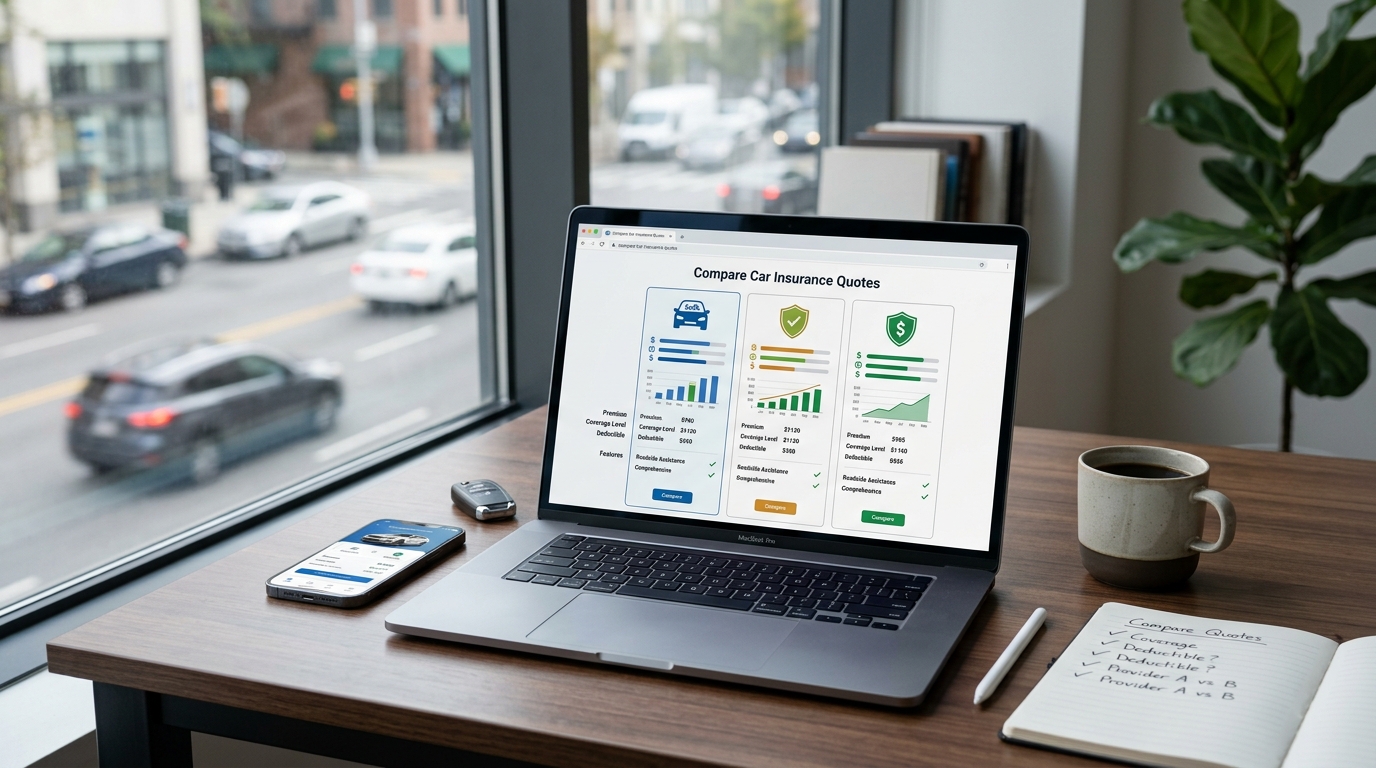
Also, provide the same coverage levels and deductibles to every insurer. Otherwise, you can’t compare apples to apples. Make a spreadsheet to track the details. List the insurer, premium, deductible, coverage limits, and any discounts applied. This makes it easy to see which quote offers the best value.
Look Beyond the Premium: What Else Matters
The premium is important, but it’s not the only factor. You also need to consider the insurer’s financial strength and customer service.
Financial strength ratings from A.M. Best, Moody’s, and Standard & Poor’s tell you how likely the company is to pay claims. You want an insurer with an “A” rating or better. If the company goes bankrupt, your claim might not get paid.
Customer satisfaction is another key factor. J.D. Power’s annual U.S. Auto Insurance Study rates insurers on billing, claims, and policy offerings. A company with low premiums but terrible service might not be worth it when you need to file a claim.
Also, check the insurer’s claims process. Some companies have mobile apps that let you file a claim and track its progress. Others require you to call and wait on hold. If you value convenience, this matters.
Finally, look at the discounts. Many insurers offer discounts for safe driving, bundling home and auto, paying in full, and even for good grades if you have a student driver. These can add up to significant savings. Ask each insurer what discounts you qualify for.
Common Mistakes to Avoid When Comparing Quotes
Even savvy shoppers make mistakes. Here are some pitfalls to watch out for.
One big mistake is choosing the cheapest quote without checking the coverage. That low premium might come with high deductibles or low liability limits. If you cause an accident, you could be on the hook for thousands of dollars.
Another mistake is not asking about discounts. You might qualify for a discount you didn’t know about, like a defensive driving course or a professional association membership. Always ask.
Don’t forget to check the insurer’s cancellation policy. Some companies charge a fee if you cancel mid-policy. Others might require you to pay back a portion of your premium. Read the fine print.
Also, avoid allowing your current policy to lapse while you shop. A lapse in coverage can lead to higher rates in the future. Time your switch so your new policy starts the day your old one ends.
How to Make the Final Decision
Once you have all your quotes, compare them side by side. Use a spreadsheet to list the premium, deductible, coverage limits, discounts, and customer service ratings. Then rank them based on what matters most to you.
If you value low price above all, go with the cheapest quote that meets your coverage needs. If you prefer peace of mind, choose an insurer with top ratings and a reputation for great service. There’s no single right answer. It depends on your priorities.
Before you buy, call the insurer to confirm the quote. Sometimes online quotes differ from the final price after a background check. Ask them to email you a detailed quote breakdown. Review it carefully to ensure it matches what you expect.
Finally, don’t be afraid to negotiate. Some insurers will match a competitor’s price or offer additional discounts to win your business. It never hurts to ask.
Conclusion
Comparing car insurance quotes the smart way takes a little effort, but it pays off. Gather your information, decide on coverage, and use multiple sources to get quotes. Look beyond the premium to consider financial strength and customer service. Avoid common mistakes like choosing the cheapest option without checking coverage. With these steps, you’ll find a policy that protects you without breaking the bank. So set aside 30 minutes today and start comparing. Your wallet will thank you.
Q: How often should I compare car insurance quotes?
You should compare quotes at least once a year, preferably before your policy renews. Rates change frequently, and insurers often raise prices for loyal customers. Shopping around every 12 months ensures you’re not overpaying. If you’ve had a major life change like moving or buying a new car, compare sooner.
Q: What information do I need to get accurate quotes?
You’ll need your driver’s license number, VIN for each vehicle, current insurance details, and driving history for all household drivers. Also, decide on coverage levels and deductibles upfront. Having this info ready ensures you get precise quotes and can compare apples to apples across insurers.
Q: Is the cheapest car insurance always the best?
Not necessarily. The cheapest quote might have minimum coverage or high deductibles, leaving you underinsured. Always compare coverage limits and deductibles, not just premiums. A slightly higher premium with better coverage could save you thousands if you file a claim. Balance cost with protection.
Q: Can I negotiate car insurance rates?
Yes, you can often negotiate. Some insurers will match a competitor’s price or offer additional discounts to keep your business. Ask about discounts you might qualify for, like safe driver or bundling. Being polite but persistent can lead to savings. It never hurts to ask.
Q: What should I do if my policy lapses while comparing quotes?
Avoid a lapse at all costs. A gap in coverage can lead to higher rates and legal penalties. Time your switch so your new policy starts the day your old one ends. If you’re mid-shopping, ask your current insurer for a short extension or renew temporarily until you decide.
Article Was Generated By AI.