Most homeowners tackle their first DIY project because a contractor quoted them $400 to do something that looked simple. That gap between the quote and the actual work is where beginners find real momentum. The projects below need basic tools, a free weekend, and a willingness to measure twice. None of them require a permit, a second person, or years of practice.
Start with one. Finish it. Then pick another. Skill builds the same way muscle does: through repetition, not through reading about it.
Tools You Actually Need Before You Start
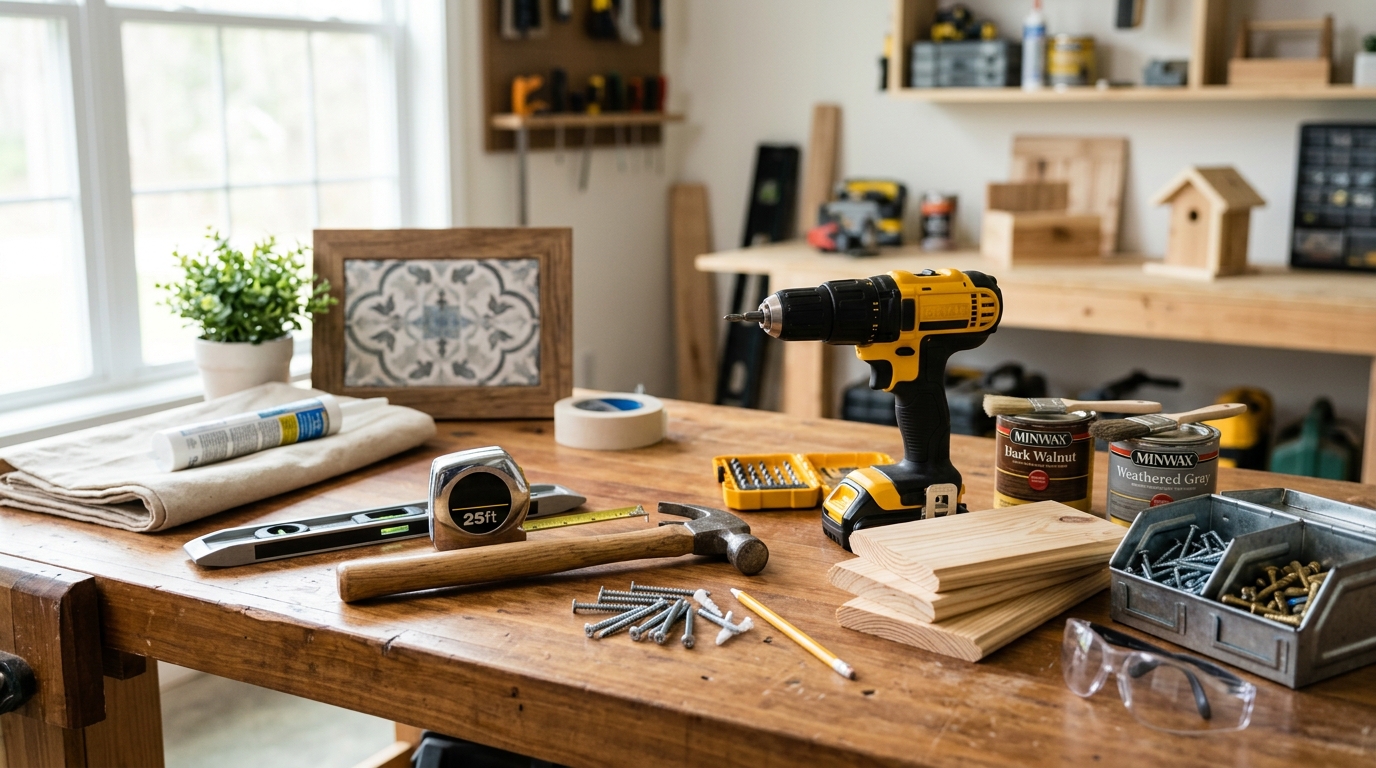
You don’t need a workshop full of gear. A cordless drill, a tape measure, a level, a putty knife, and a caulk gun cover roughly 80% of beginner projects. Add a stud finder for anything you’ll hang on a wall.
Buy mid-range tools, not the cheapest option on the shelf. A $60 drill from a reputable brand will outlast three $25 versions and cost less over five years. In practice, cheap tools create stripped screws, which create frustration, which kills projects halfway through.
One more thing: keep a small notebook with measurements of your rooms, windows, and doorways. You’ll stop guessing every time you’re at the hardware store.
Painting a Room: The Highest-Impact Starter Project
Paint is the cheapest way to change how a room feels. A gallon of mid-grade interior paint costs $30 to $50 and covers about 350 square feet. A standard 12×12 bedroom needs roughly two gallons for two coats.
The prep work matters more than the painting. Tape off trim, cover floors with canvas drop cloths (plastic ones slide and tear), and fill nail holes with lightweight spackle. Let the spackle dry, then sand it smooth with 220-grit paper.
Cutting In Without the Mess
Most beginners struggle with edges. Skip the fancy edging tools and use a 2-inch angled brush instead. Load it about a third of the way up the bristles, tap off the excess, and draw a slow line along the ceiling or trim.
Work in sections of 3 to 4 feet. If your hand shakes, you’re moving too fast. Paint the ceiling and trim first, then the walls, then touch up mistakes at the end. Sherwin-Williams and Benjamin Moore both publish free color consultation guides online if you’re stuck on shade selection.
Caulking and Sealing Gaps Around the House
Air leaks around windows and doors can add 10% to 20% to your heating bill, according to the U.S. Department of Energy. Caulking those gaps takes an afternoon and costs under $20 in materials.
Use paintable acrylic latex caulk for interior trim and doors. Use silicone caulk in bathrooms and kitchens where moisture is constant. Cut the nozzle at a 45-degree angle, and keep the opening small, about the width of a pencil tip.
Push the caulk gun forward as you squeeze, not backward. This forces the caulk into the gap instead of smearing it across the surface. Smooth the bead with a wet finger for a clean finish.
Swapping Out Light Fixtures and Hardware
Replacing a dated light fixture takes about 30 minutes once the power is off. Flip the breaker, not just the wall switch, and test with a voltage tester before touching any wires.
Most fixtures use three wires: black (hot), white (neutral), and bare copper (ground). Match them to the same colors on the new fixture with wire nuts, then tuck the wires into the box and screw the fixture in place. If the box feels loose, stop and call an electrician. A loose box can’t safely hold a fixture.
Cabinet hardware is even easier. Swapping dated knobs for modern pulls runs $2 to $8 per piece and transforms a kitchen in an hour. Measure the existing hole spacing before you buy, or you’ll be drilling new holes.
Small Fixes That Add Up Fast
These projects each take under two hours and cost less than $50. Stack a few together on a Saturday and you’ll notice the difference immediately.
- Replace a showerhead with a low-flow model to cut water use by up to 40%
- Install felt pads under furniture legs to protect hardwood floors
- Re-caulk the kitchen sink rim where the old bead has cracked
- Swap incandescent bulbs for LED versions, which use about 75% less energy
- Add a peel-and-stick backsplash in a rental kitchen or laundry room
- Replace a toilet flapper to stop a running toilet that wastes 200 gallons a day
That running toilet stat comes from the EPA’s WaterSense program. Fixing it costs $8 and takes 15 minutes. It’s the single best return on effort in this entire list.
Mistakes Beginners Make (and How to Skip Them)
The most common mistake is skipping prep. Painting over dirty walls, caulking over wet surfaces, or installing hardware without measuring twice all lead to rework. Prep is 60% of the job and nobody sees it.
The second mistake is buying materials before measuring. That gallon of paint you guessed at might be one shade off, and most stores won’t accept tinted paint returns.
The third is overreaching on project one. Don’t start with a tile shower or a load-bearing wall. Start with a painted accent wall. Confidence comes from finished projects, not ambitious ones.
Keep a folder, physical or digital, of receipts and paint colors for every project. When you sell the house, that folder is worth real money to a buyer who wants to touch up a wall.
When to Stop and Call a Pro
Some jobs look beginner-friendly but aren’t. Anything involving gas lines, main electrical panels, or structural walls needs a licensed professional. So does asbestos or lead paint in homes built before 1978.
Water damage is another red flag. If you pull up a floorboard and find soft wood, stop. Mold remediation and subfloor repair are not weekend projects, and hiding the problem makes it worse.
Everything else on this list is fair game. Pick one. Buy the tools. Block out four hours. You’ll finish with a better room and a new skill.
Conclusion
Beginner DIY isn’t about talent. It’s about picking manageable projects and finishing them. Paint a wall, caulk a window, swap a light fixture. Each one teaches you something the next project will need.
Start this weekend with the smallest item on your list. The momentum you build will carry you into bigger projects within a year.
Q: What’s the easiest DIY project for a total beginner?
Painting a single accent wall is the safest starting point. It needs one gallon of paint, a brush, a roller, and about three hours. Mistakes are easy to fix and the cost stays under $50. Once you’ve painted one wall, you’ll understand prep, drying times, and cutting in, which are the same skills every other painting job requires.
Q: How much should I budget for my first DIY project?
Plan for $100 to $200 total, including tools. A cordless drill, tape measure, and level cost about $100 combined and last for years. Materials for a beginner project like caulking or painting usually run $20 to $60. Buying mid-range tools instead of the cheapest option saves money over time because they don’t strip screws or break mid-project.
Q: Do I need a permit for small home improvement projects?
Most beginner projects don’t require permits. Painting, caulking, swapping light fixtures, replacing cabinet hardware, and installing a showerhead are all permit-free in typical jurisdictions. You’ll usually need permits for electrical panel work, plumbing changes, structural modifications, and anything involving gas lines. When in doubt, call your local building department. A two-minute phone call beats a fine.
Q: How do I avoid making expensive mistakes as a beginner?
Measure twice before buying anything, and keep receipts in one folder. Take photos of your space and bring exact measurements to the store. Watch a full tutorial before starting, not during. Most beginner errors come from skipping prep or guessing at dimensions. If a project involves gas, main electrical panels, or load-bearing walls, hire a licensed pro instead.
Q: Which DIY upgrades add the most value to a home?
Fresh paint and updated cabinet hardware give the best return for beginners. Both cost under $200 and dramatically change how a room looks in photos, which matters at resale. Caulking air leaks and replacing old light fixtures also help, since buyers notice energy efficiency and dated lighting. Structural changes add more value but aren’t beginner territory.
Article Was Generated By AI.