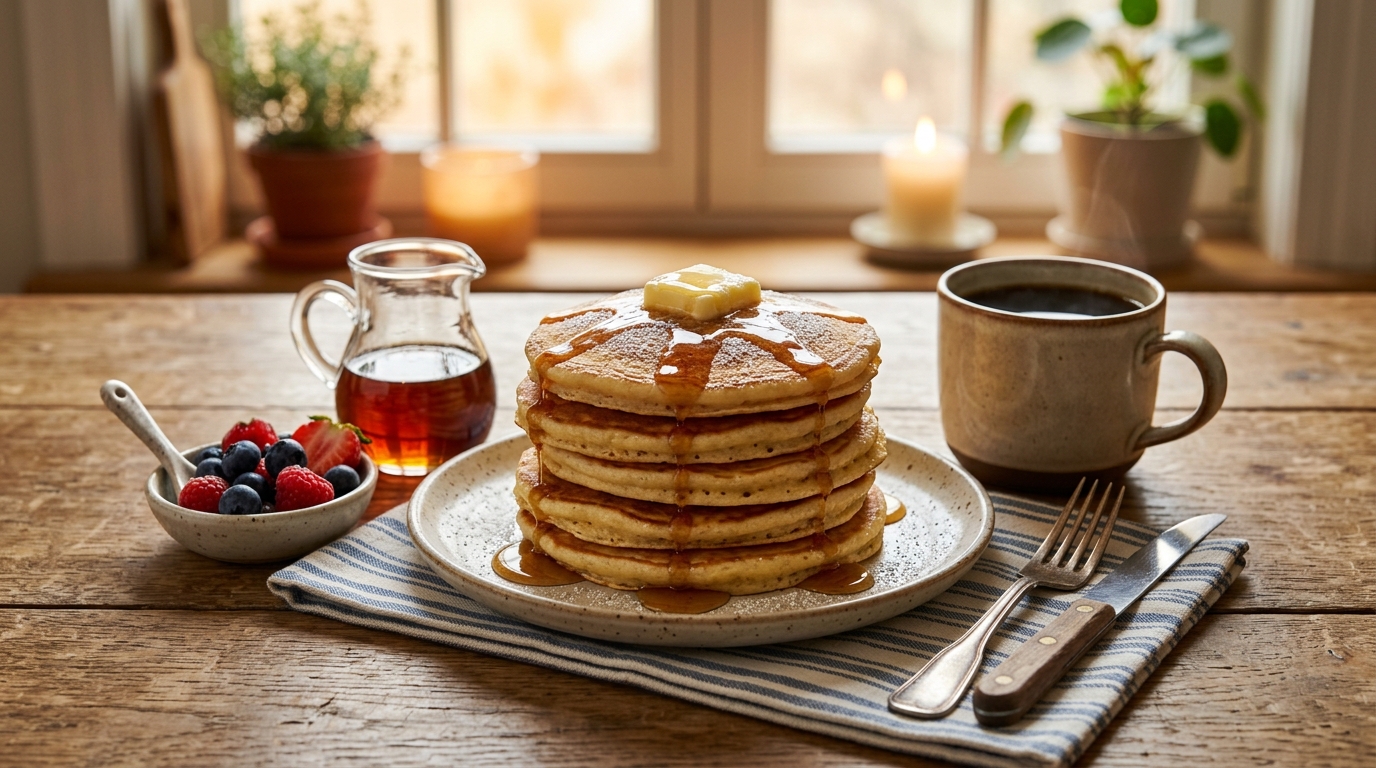
Weekend mornings deserve pancakes. Not the boxed kind, but the real thing, hot off the griddle with butter melting into every golden edge. This recipe takes 20 minutes from start to finish and uses six ingredients you probably already have. No buttermilk run to the store. No special equipment.
I’ve tested this recipe dozens of times, sometimes at 7 a.m. with a toddler on my hip. It works. The pancakes come out thick, fluffy, and slightly tangy from a secret ingredient that’s sitting in your fridge right now. Let’s get into it.
What Makes a Pancake Recipe Easy?
Easy means fewer steps, fewer dishes, and no last-minute grocery runs. This recipe uses one bowl for dry ingredients and one for wet. You don’t need a stand mixer or a sifter. A fork works fine.
The other mark of an easy recipe: forgiving measurements. If you’re a tablespoon short on sugar or add a splash too much milk, the pancakes still turn out. According to a 2018 study in the Journal of Food Science, pancake batter can tolerate up to 10% variation in liquid without major texture changes. So don’t stress about being exact.
The Secret Ingredient: Sour Cream
Most easy pancake recipes call for buttermilk. But who keeps buttermilk in the fridge? Sour cream does the same job. It adds tang and fat, which keeps the pancakes moist and helps them rise.
I learned this trick from Dorie Greenspan’s baking books, where she swaps sour cream for buttermilk in cakes and muffins. It works the same way here. Two tablespoons per cup of milk gives you that buttermilk tang without a trip to the store.
If you don’t have sour cream, plain yogurt works too. Greek yogurt is thicker, so thin it with a splash of milk first.
The Only Pancake Recipe You Need
Here’s the full recipe. It makes about 8 medium pancakes, enough for two hungry people or three light eaters.
Ingredients
- 1 cup all-purpose flour (120 grams)
- 2 tablespoons granulated sugar
- 2 teaspoons baking powder
- 1/2 teaspoon baking soda
- 1/2 teaspoon salt
- 1 large egg
- 3/4 cup whole milk
- 2 tablespoons sour cream (or plain yogurt)
- 2 tablespoons melted butter, plus more for the pan
- 1 teaspoon vanilla extract (optional but recommended)
Instructions
- Whisk the flour, sugar, baking powder, baking soda, and salt in a large bowl. Make a well in the center.
- In a separate bowl, whisk the egg, milk, sour cream, melted butter, and vanilla until smooth.
- Pour the wet ingredients into the dry. Stir with a fork just until combined. The batter will be lumpy. That’s good.
- Let the batter rest for 5 minutes while you heat a nonstick skillet or griddle over medium heat.
- Add a small pat of butter to the pan. Pour 1/4 cup of batter per pancake. Cook until bubbles form on top and the edges look set, about 2 to 3 minutes.
- Flip and cook for 1 to 2 minutes more, until golden brown. Repeat with remaining batter.
That’s it. Total time: 20 minutes. Cleanup: two bowls and a whisk.
Why Lumpy Batter Matters
Overmixing is the number one mistake home cooks make with pancakes. When you stir flour and liquid together, gluten strands start to form. The more you stir, the tougher the pancakes get.
Lumps are your friend. They mean you stopped stirring at the right time. A few dry patches in the batter will hydrate as the pancakes cook. This tip comes from Shirley Corriher, a biochemist and author of CookWise, who explains that gluten development is the enemy of tenderness in quick breads.
So resist the urge to whisk until smooth. Stir until the flour is just barely incorporated, then walk away.
How to Get Tall, Fluffy Pancakes
Three things make pancakes rise: baking powder, baking soda, and the acid in sour cream. The baking soda reacts with the acid to create bubbles. Those bubbles expand when the batter hits the hot pan.
But there’s another trick. Resting the batter for 5 minutes lets the flour hydrate and the leaveners start working. You’ll see tiny bubbles forming on the surface. That’s a good sign.
Also, don’t press down on the pancakes with your spatula. That squashes the air out. Let them puff up naturally.
Toppings and Variations
Classic maple syrup is never wrong. But if you want to mix things up, here are a few ideas that take these pancakes from good to great.
- Fresh berries folded into the batter (blueberries are classic, but raspberries work too)
- A handful of chocolate chips scattered on top before flipping
- Sliced bananas and a drizzle of peanut butter
- Lemon zest and a spoonful of ricotta in the batter
- Crumbled bacon and a drizzle of maple syrup for a sweet-salty combo
My personal favorite: a thin layer of Greek yogurt, a drizzle of honey, and toasted walnuts. It feels fancy but takes 30 seconds.
Make-Ahead Tips
You can mix the dry ingredients the night before and store them in a zip-top bag. In the morning, just add the wet ingredients. That cuts your prep time to about 5 minutes.
Cooked pancakes freeze well too. Let them cool completely, then stack them with a piece of parchment paper between each one. Freeze in a zip-top bag for up to 2 months. Reheat in the toaster or microwave.
This is a game-changer for busy school mornings. You get homemade pancakes without the 20-minute commitment.
Common Pancake Mistakes to Avoid
Even simple recipes can go wrong. Here are the three most common issues and how to fix them.
Pancakes are flat. Your baking powder might be old. Test it by dropping a teaspoon into hot water. If it fizzes, it’s still good. If not, toss it and buy a new can.
Pancakes are tough. You overmixed the batter. Next time, stir less. Lumps are fine.
Pancakes burn on the outside but are raw inside. Your pan is too hot. Turn the heat down to medium-low and give the pancakes an extra minute per side. A good test: flick a few drops of water onto the pan. If they dance and evaporate immediately, it’s too hot. They should sizzle gently.
In practice, the biggest fix is patience. Let the pan heat evenly before pouring the first pancake. And don’t flip too early. Wait for those bubbles.
Conclusion
Great pancakes don’t need a mix or a restaurant. They need six ingredients, a hot pan, and a light hand with the whisk. This recipe takes 20 minutes and delivers fluffy, golden pancakes every time.
Try it this weekend. Then tweak it. Add blueberries. Swap in yogurt. Make it yours. That’s the best part of cooking at home.
Q: Can I use buttermilk instead of sour cream?
Yes. Replace the milk and sour cream with 3/4 cup plus 2 tablespoons of buttermilk. The pancakes will have a similar tang and rise. If you don’t have buttermilk, you can also make a quick substitute by stirring 1 tablespoon of lemon juice into 3/4 cup of milk and letting it sit for 5 minutes.
Q: Why are my pancakes flat?
Flat pancakes usually mean old baking powder or overmixed batter. Test your baking powder by adding a teaspoon to hot water. If it fizzes, it’s fine. If not, replace it. Also, stir the batter just until combined. Lumps are okay. Overmixing develops gluten and deflates the bubbles that make pancakes rise.
Q: Can I make the batter ahead of time?
You can mix the dry ingredients the night before and store them in a bag. But once you add the wet ingredients, cook the pancakes within 15 minutes. The baking soda starts reacting immediately. If you let the batter sit too long, the pancakes won’t rise as well and may taste metallic.
Q: How do I keep pancakes warm while cooking the rest?
Place cooked pancakes on a wire rack set over a baking sheet in a 200°F oven. The rack keeps them from getting soggy. Don’t stack them directly on a plate, because the steam will make them limp. If you’re cooking for a crowd, this method keeps pancakes hot for up to 30 minutes.
Q: Can I freeze leftover pancakes?
Yes. Let them cool completely, then stack with parchment paper between each pancake. Freeze in a zip-top bag for up to 2 months. Reheat in a toaster, microwave, or oven until hot. They taste almost as good as fresh, which makes busy mornings much easier.
Article Was Generated By AI.