Weeknight cooking doesn’t have to be a scramble. With the right ingredients and tools on hand, you can whip up a satisfying meal in 30 minutes or less. The secret is a well-stocked kitchen that covers the basics without overwhelming you.
According to a 2022 survey by the Food Industry Association, 68% of Americans say they enjoy cooking at home, but 45% cite lack of time as their biggest barrier. A stocked kitchen removes that barrier. It means fewer trips to the store and less decision fatigue when you’re hungry and tired.
In this guide, you’ll learn exactly what to keep in your pantry, fridge, and freezer, plus the tools that make weeknight cooking a breeze. These aren’t just random lists. They’re based on what professional chefs and home cooks actually use every day.
Start with a Core Pantry
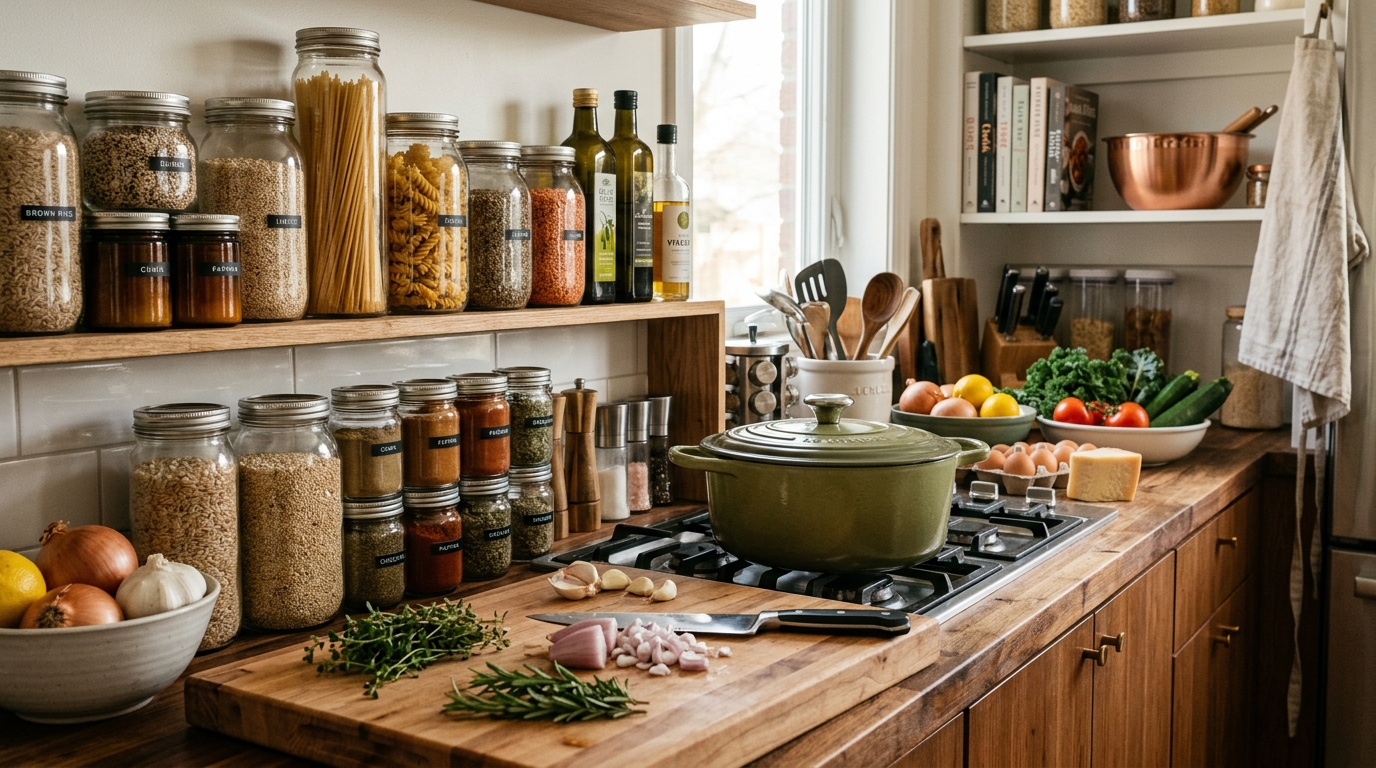
Your pantry is the foundation. It’s where you store shelf-stable items that add flavor and substance to any meal. The goal is to have enough variety to improvise, but not so much that things expire before you use them.
Chef and cookbook author J. Kenji López-Alt recommends keeping a tight collection of high-impact ingredients. In his book The Food Lab, he notes that a well-stocked pantry should let you cook at least five different meals without a shopping trip. That’s a good benchmark.
Pantry Essentials
- Olive oil and neutral oil (like canola or grapeseed)
- Kosher salt and freshly ground black pepper
- Canned tomatoes (whole peeled and diced)
- Dried pasta in a few shapes
- Rice (long-grain like jasmine or basmati)
- Canned beans (chickpeas, black beans, cannellini)
- Stock or broth (chicken, vegetable)
- Garlic and onions (these last a while in a cool, dark spot)
- Soy sauce, vinegar (balsamic and red wine), and honey
- Spices: cumin, paprika, chili flakes, oregano, cinnamon
That list might look long, but it’s the backbone of countless meals. With these items, you can make pasta e fagioli, stir-fried rice, bean tacos, and more. The key is to buy what you’ll actually use. Don’t stock 10 types of vinegar if you only cook with one.
Store your pantry items in clear containers or a dedicated shelf. You’ll see what you have and avoid buying duplicates. A 2021 study in Waste Management found that the average American household wastes about 32% of the food it buys. Visibility helps cut that number.
Stock Your Fridge and Freezer for Speed
The fridge and freezer are your secret weapons for weeknight speed. They hold perishables that turn basic pantry items into complete meals. The freezer, in particular, is underused by most home cooks.
Chef and restaurateur Tom Colicchio told Bon Appétit that he always keeps frozen peas and spinach on hand. They’re just as nutritious as fresh and they’re already prepped. That’s a game-changer on a busy Tuesday.
Fridge Staples
- Eggs (they last weeks and can be dinner)
- Butter and plain yogurt
- Cheese: Parmesan, cheddar, and a soft cheese like feta
- Lemons and limes
- Fresh herbs (parsley, cilantro, basil) or paste tubes
- Miso paste or tomato paste in a tube
- Mayonnaise, mustard, and hot sauce
These items add acidity, richness, and umami. A squeeze of lemon or a spoon of miso can rescue a bland dish. Keep them where you can see them, not buried in the back.
Freezer Must-Haves
- Frozen vegetables: peas, spinach, corn, edamame
- Frozen fruit: berries, mango for smoothies or desserts
- Protein: chicken thighs, ground meat, shrimp, fish fillets
- Bread: tortillas, sliced bread, pita
- Pre-made stock or sauce cubes
- Nuts and seeds (they stay fresh longer)
Portion your proteins before freezing. A 2023 report from the USDA suggests that freezing in meal-sized portions reduces thaw time and waste. For example, freeze ground meat in 1-pound flats, and chicken thighs individually. You’ll thank yourself later.
Label everything with the date. A roll of masking tape and a Sharpie costs less than $5 and prevents mystery packages. Use within three months for best quality.
Choose Tools That Do Double Duty
You don’t need a kitchen full of gadgets. You need a few reliable tools that make cooking faster and easier. In practice, most weeknight meals come down to a handful of techniques: sautéing, roasting, boiling, and stir-frying.
Chef and author Samin Nosrat emphasizes the importance of a few key tools in her book Salt, Fat, Acid, Heat. She writes that a sharp knife, a sturdy pan, and a good spatula are the only essentials. Everything else is a bonus.
Must-Have Tools
- Chef’s knife (8-inch) and paring knife
- Cutting board (wood or plastic)
- Large skillet or sauté pan (12-inch)
- Dutch oven or large pot
- Sheet pan
- Mixing bowls
- Measuring cups and spoons
- Wooden spoon and tongs
That’s it. You can cook almost anything with these. A blender or food processor is nice for sauces, but not required. An Instant Pot or slow cooker can help, but it’s not mandatory.
Keep your tools organized. A drawer divider for knives and a hook for tongs saves time. According to a 2020 study in the Journal of Culinary Science & Technology, home cooks who organized their workspace reduced meal prep time by 20%. That’s 10 minutes saved on a 50-minute meal.
Plan for Mix-and-Match Meals
The real magic of a stocked kitchen is flexibility. You can combine a protein, a vegetable, a starch, and a sauce to create endless variations. This approach is sometimes called “component cooking.”
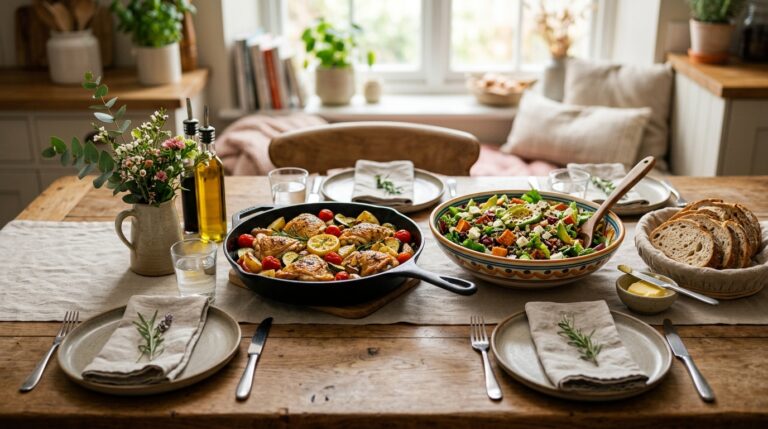
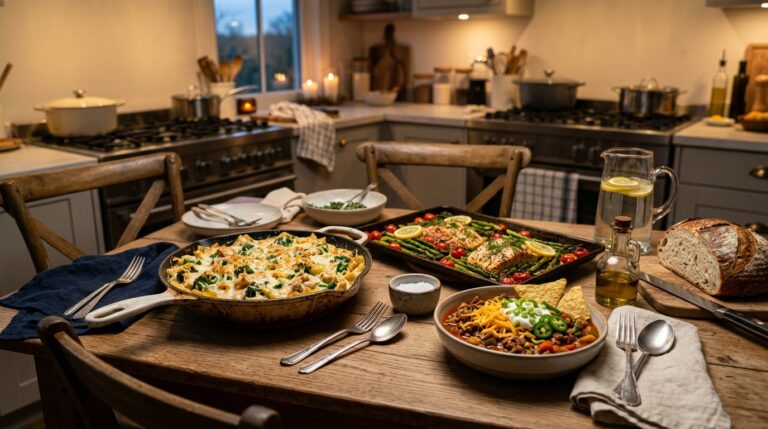
For example, you can roast a sheet pan of chicken thighs and broccoli while rice cooks on the stove. Then top with a sauce made from yogurt, lemon, and garlic. That’s a complete meal in 30 minutes with minimal cleanup.
Another combo: sauté ground beef with taco seasoning, warm tortillas, and set out cheese, lettuce, and salsa. Everyone builds their own. It’s fast and kid-friendly.
Chef and TV personality Rachael Ray built her career on 30-minute meals. Her philosophy: keep it simple, use what you have, and don’t stress about perfection. That’s the mindset you want for weeknights.
Quick Sauce Formulas
Sauces transform plain ingredients. Memorize a few ratios and you’ll never be bored.
- Vinaigrette: 3 parts oil, 1 part vinegar, salt, pepper
- Yogurt sauce: 1 cup yogurt, 1 clove grated garlic, lemon juice, salt
- Stir-fry sauce: 2 tbsp soy sauce, 1 tbsp honey, 1 tsp vinegar, grated ginger
- Tomato sauce: canned tomatoes, olive oil, garlic, salt, simmered 15 minutes
These take less than 5 minutes to make. They’ll make any protein or veg taste intentional.
Maintain Your Stock with a Simple Routine
A stocked kitchen isn’t a one-time project. It’s a habit. Spend 15 minutes once a week to check what you have and what you need. This prevents the “there’s nothing to eat” feeling.
Before you shop, look at your fridge and pantry. Plan three to four dinners for the week. Write a list. Stick to it. This reduces impulse buys and saves money.
A 2022 study in the Journal of Nutrition Education and Behavior found that people who meal planned spent 15% less on groceries and ate more vegetables. The effect was strongest when they planned around what they already had.
After you cook, take 5 minutes to tidy up. Wipe counters, put away leftovers, and note anything you’re running low on. This small step keeps your kitchen ready for the next meal.
Rotate your stock. Use older items first. Keep a basket in the pantry for items that need to be used soon. This simple system cuts waste and keeps your pantry fresh.
Conclusion
Stocking your kitchen for easy weeknight cooking comes down to three things: a core pantry, a few key tools, and a flexible mindset. You don’t need every gadget or exotic ingredient. You need the basics you’ll actually use, organized so you can see them.
Start with the lists above. Adjust based on what you like to eat. In a few weeks, you’ll notice that dinner comes together faster and with less stress. And that’s the whole point.
Q: What are the absolute must-have pantry items for weeknight cooking?
You need olive oil, salt, pepper, canned tomatoes, pasta, rice, canned beans, stock, garlic, onions, and a few spices like cumin and paprika. These form the base for countless meals. With just these, you can make pasta dishes, stir-fries, soups, and tacos. Don’t overbuy. Start with this core and expand as you cook.
Q: How often should I restock my kitchen?
A quick check once a week works well. Spend 15 minutes before you shop to see what you’re low on. Then plan three to four dinners and make a list. This routine prevents last-minute trips and reduces food waste. It also helps you use what you already have.
Q: Can I stock a kitchen on a budget?
Yes. Focus on inexpensive staples like dried beans, rice, oats, and frozen vegetables. Buy whole chickens and break them down yourself. Use sales and store brands. A 2021 study found that meal planning around pantry items cut grocery bills by 15%. You don’t need fancy ingredients to eat well on weeknights.
Q: What tools are essential for fast weeknight meals?
A sharp chef’s knife, a large skillet, a Dutch oven, a sheet pan, and a cutting board cover 90% of weeknight cooking. Add tongs, a wooden spoon, and measuring cups. You don’t need a blender or Instant Pot unless you’ll use them often. Keep tools accessible and organized to save time.
Q: How do I prevent food waste in a stocked kitchen?
Store items where you can see them, label frozen foods with dates, and rotate older items to the front. Keep a “use soon” basket in the fridge. Plan meals around what needs to be eaten first. These habits cut waste significantly. The average household wastes 32% of food, so small changes make a big difference.
Article Was Generated By AI.